
Basement Design That Feels Intentional: Turning Lower Levels into Livable, Lasting Spaces
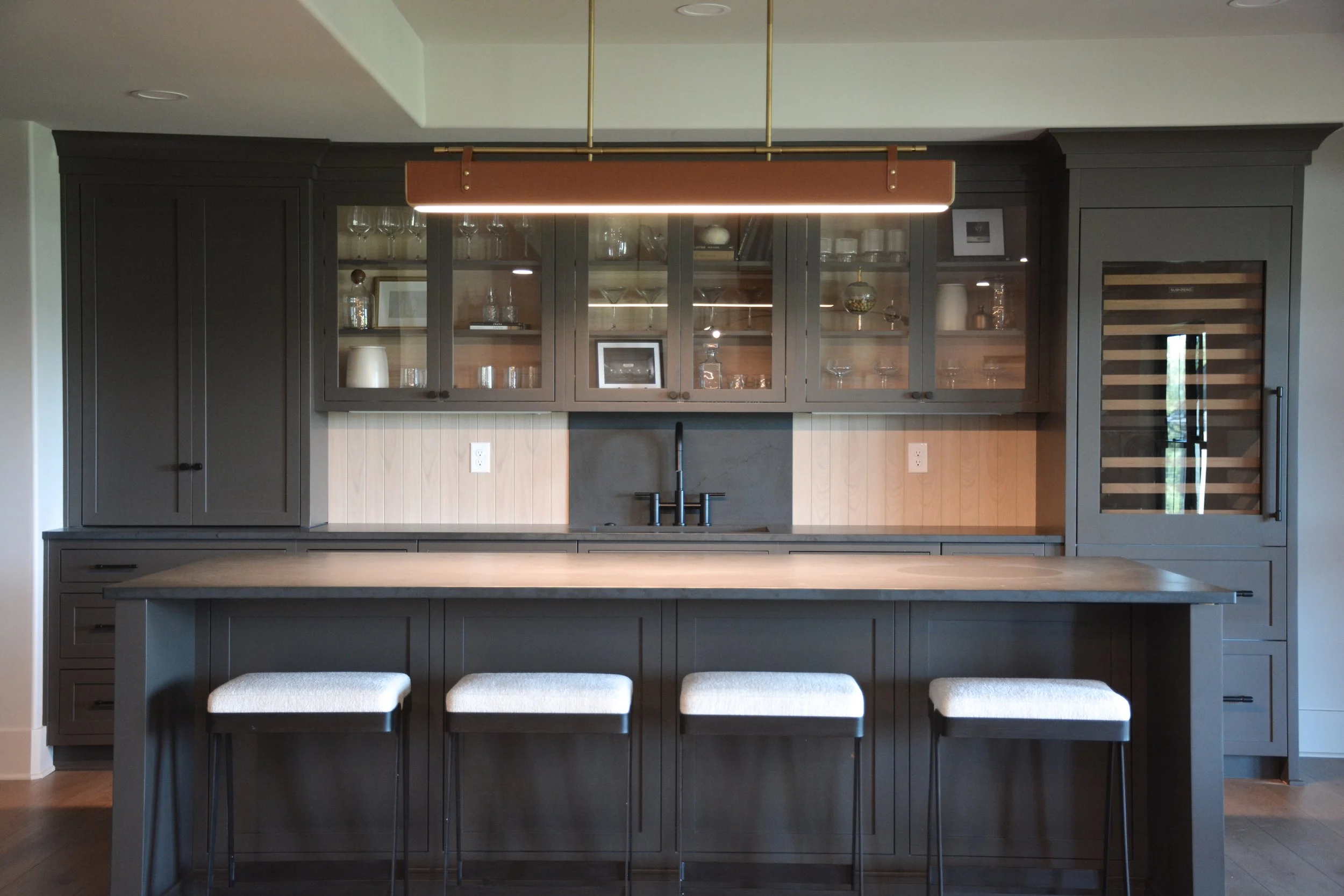
A fully integrated basement bar designed with deep-toned cabinetry, glass-front upper cabinets, and built-in wine refrigeration for both display and function. The oversized island provides generous seating, while the linear pendant lighting reinforces symmetry and proportion. Vertical panel detailing and a restrained material palette keep the space grounded and cohesive. This lower-level bar illustrates how thoughtful millwork and lighting design can transform a basement into a refined entertaining environment rather than a secondary utility space.
Basement Design That Feels Intentional: Rethinking the Lower Level
Basements are often approached as secondary spaces within the home — finished later, furnished inconsistently, and treated more as overflow than as part of the overall living experience. Yet when planned thoughtfully, a basement can become one of the most functional and valuable spaces in the house. The difference comes from approaching the lower level with the same level of architectural and interior consideration given to kitchens, living rooms, and primary suites.
At Studio Nine Interiors, basement projects begin with intention rather than limitation. The goal is not simply completing unfinished square footage, but creating an environment that feels cohesive with the rest of the home while supporting how the household actually lives. When layout, lighting, materials, storage, and long-term function are planned together from the beginning, the basement becomes a space people naturally use and enjoy rather than a disconnected afterthought.
A well-designed basement should feel composed, comfortable, and fully integrated into the home’s identity. It should support gathering, retreat, work, entertainment, and flexibility without feeling visually heavy or overly segmented. This is where thoughtful interior planning becomes essential.
Start With Purpose Instead of Square Footage
One of the most common mistakes in basement design is focusing on the amount of available space before establishing how the space should function. A large basement without direction often becomes fragmented and underused, while a smaller lower level planned intentionally around specific needs can feel complete and highly functional.
Before walls are framed or finishes are selected, the most important step is determining how the basement will support both current and future lifestyles. Some households prioritize entertaining and gathering, creating media spaces, lounges, bars, or game areas. Others focus on privacy through guest suites, home offices, wellness rooms, or quiet retreats. Many successful basements combine several functions, but only when those functions are clearly organized and thoughtfully connected.
This early clarity influences every decision that follows, from circulation patterns and ceiling treatments to lighting plans and furniture layouts. When the purpose is defined first, the basement feels intentional rather than improvised.
Designing for Flexibility Without Losing Structure
Flexibility is often a major goal in lower-level design, but flexibility without organization can leave a basement feeling undefined. The strongest spaces create zones that are adaptable while still maintaining clear purpose.
A lounge area may also support entertaining. A guest suite may double as a home office. A recreation room may occasionally function as overflow gathering space during holidays or events. These combinations work best when the primary use remains clear and the secondary use is incorporated thoughtfully.
Interior-led planning helps prevent the basement from feeling visually scattered. Through furniture placement, lighting changes, millwork details, and subtle material transitions, each area can maintain its own identity while still contributing to a cohesive overall environment.
Basement Layout: Creating Flow Below Grade
Because basements often lack the natural transitions found on upper floors — including stronger daylight, exterior views, and architectural cues — layout becomes even more important. A successful basement should feel intuitive to move through, with circulation paths that feel natural rather than forced.
Poorly planned lower levels often become maze-like, overly compartmentalized, or visually disconnected. Open concepts can work well in basements, but only when scale and proportion are handled carefully. Too much openness can leave the room feeling cavernous, while too many partitions can make it feel compressed.
Studio Nine Interiors approaches basement layout by balancing openness with structure. Furniture placement, ceiling treatments, millwork details, and flooring transitions help define individual zones without relying on excessive walls or abrupt separations.
Managing Transitions Between Spaces
Transitions play a major role in how cohesive a basement feels. Moving from a media room into a bar area, from a gym into a lounge, or from a guest suite into a shared living space should feel deliberate rather than abrupt.
Lighting changes, ceiling details, flooring shifts, and architectural millwork often create smoother transitions than traditional partitions. These subtle design elements allow each area to maintain identity while still contributing to a unified lower-level experience.
When transitions are handled carefully, the basement reads as a connected sequence of thoughtfully designed spaces rather than a collection of unrelated rooms.
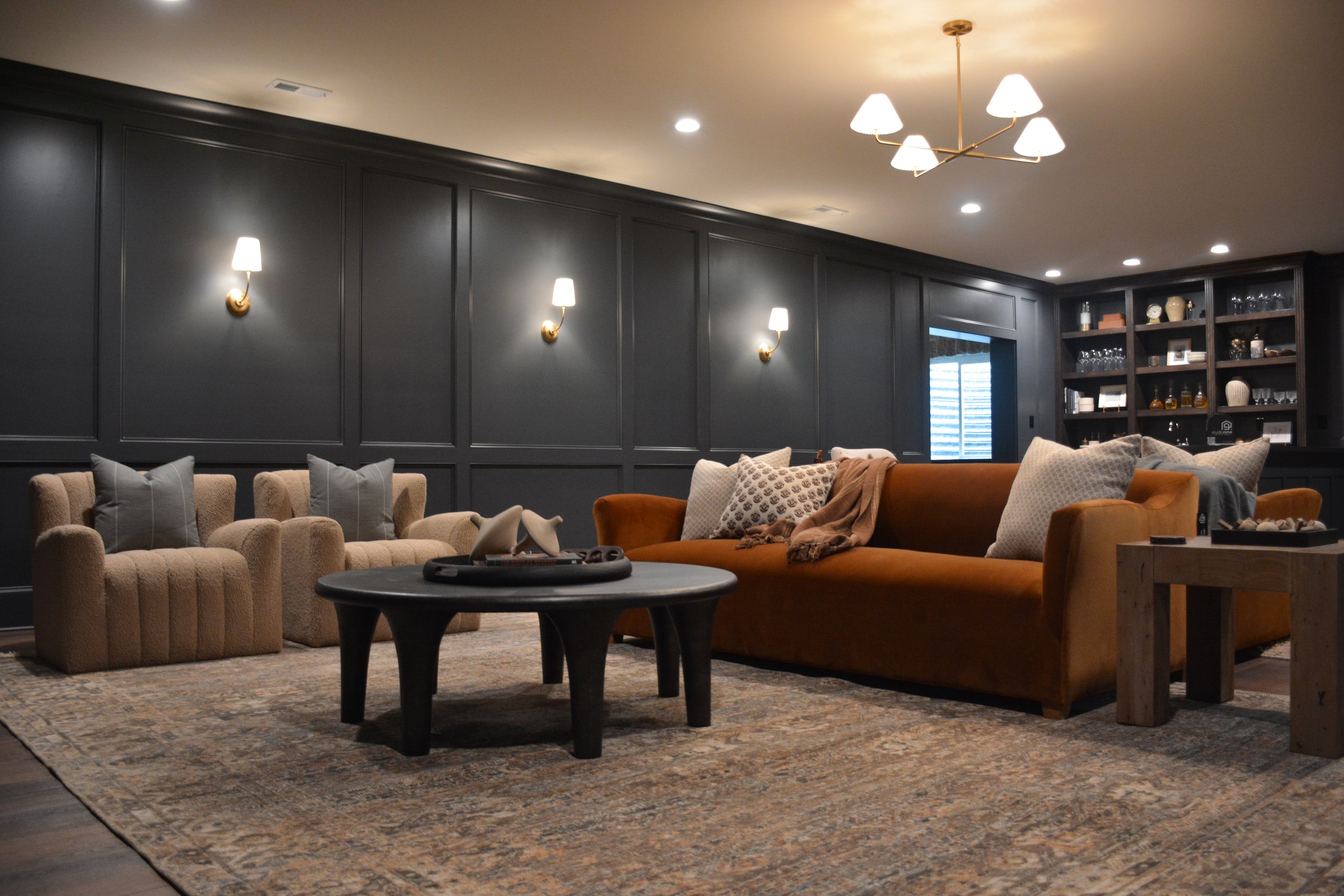
This basement lounge pairs sculptural coffee tables with deep wall tones and custom shelving for a cohesive, elevated look. Warm metallic sconces add rhythm along the paneled wall, reinforcing the sense of architectural intention. The palette feels grounded and deliberate rather than secondary to the upper level.
Lighting Is the Foundation of Basement Design
Lighting is often the single most important factor in how a basement feels. Without a strong lighting plan, even high-end materials and furnishings can feel flat or disconnected. Since basements naturally receive less daylight, artificial lighting must create depth, warmth, comfort, and balance.
The most successful basement lighting plans rely on layering rather than a single source. Ambient lighting establishes overall comfort and visibility. Task lighting supports activities like reading, working, or entertaining. Accent lighting introduces atmosphere while highlighting architectural details, shelving, artwork, or textured materials.
When these layers work together, the basement feels calm, intentional, and welcoming instead of dim or overly bright.
Working With Limited Natural Light
If windows or light wells are available, they should be emphasized rather than minimized. Furniture placement, drapery choices, and color palettes should all support the movement of natural light deeper into the space.
In many cases, softer neutrals paired with warmer artificial lighting create a more balanced result than trying to replicate daylight directly. Reflective surfaces can also help distribute light, but they should be used carefully and intentionally.
Mirrors work best when reflecting architectural features, layered lighting, or visually interesting focal points rather than clutter or empty walls.
Ceiling Height and Lighting Coordination
Ceiling height strongly influences lighting strategy in lower-level spaces. Recessed fixtures must be spaced thoughtfully to avoid creating a harsh “grid” effect overhead. Surface-mounted or low-profile fixtures can often introduce more character while preserving headroom.
Wall washers, integrated shelf lighting, and cove illumination can visually lift the ceiling and soften the overall atmosphere. These subtle lighting techniques help the basement feel more expansive and comfortable without overwhelming the architecture.
Material Selection: Balancing Durability and Warmth
Basements require materials that can withstand humidity fluctuations, heavier use, and temperature variation, but performance should never come at the expense of comfort. The strongest lower-level interiors combine durability with warmth, allowing the space to feel residential and inviting rather than overly utilitarian.
Flooring often establishes the tone of the basement. Engineered hardwood, high-quality luxury vinyl, textured tile, and layered area rugs can all perform well when selected intentionally within the broader material palette.
Wall finishes should contribute softness and depth rather than emphasizing the basement setting through overly glossy or cold surfaces.
Texture Creates Warmth and Dimension
Texture plays an important role in preventing lower levels from feeling flat or overly sterile. Upholstered seating, layered rugs, drapery panels, natural woods, matte finishes, and architectural wall details all contribute warmth and softness.
Even subtle texture shifts can significantly influence how comfortable the basement feels. Paneled walls, plaster finishes, woven materials, and tactile fabrics introduce visual richness without relying on excessive color or decoration.
A restrained material palette layered thoughtfully with texture often creates a more elevated result than a busier mix of competing finishes.
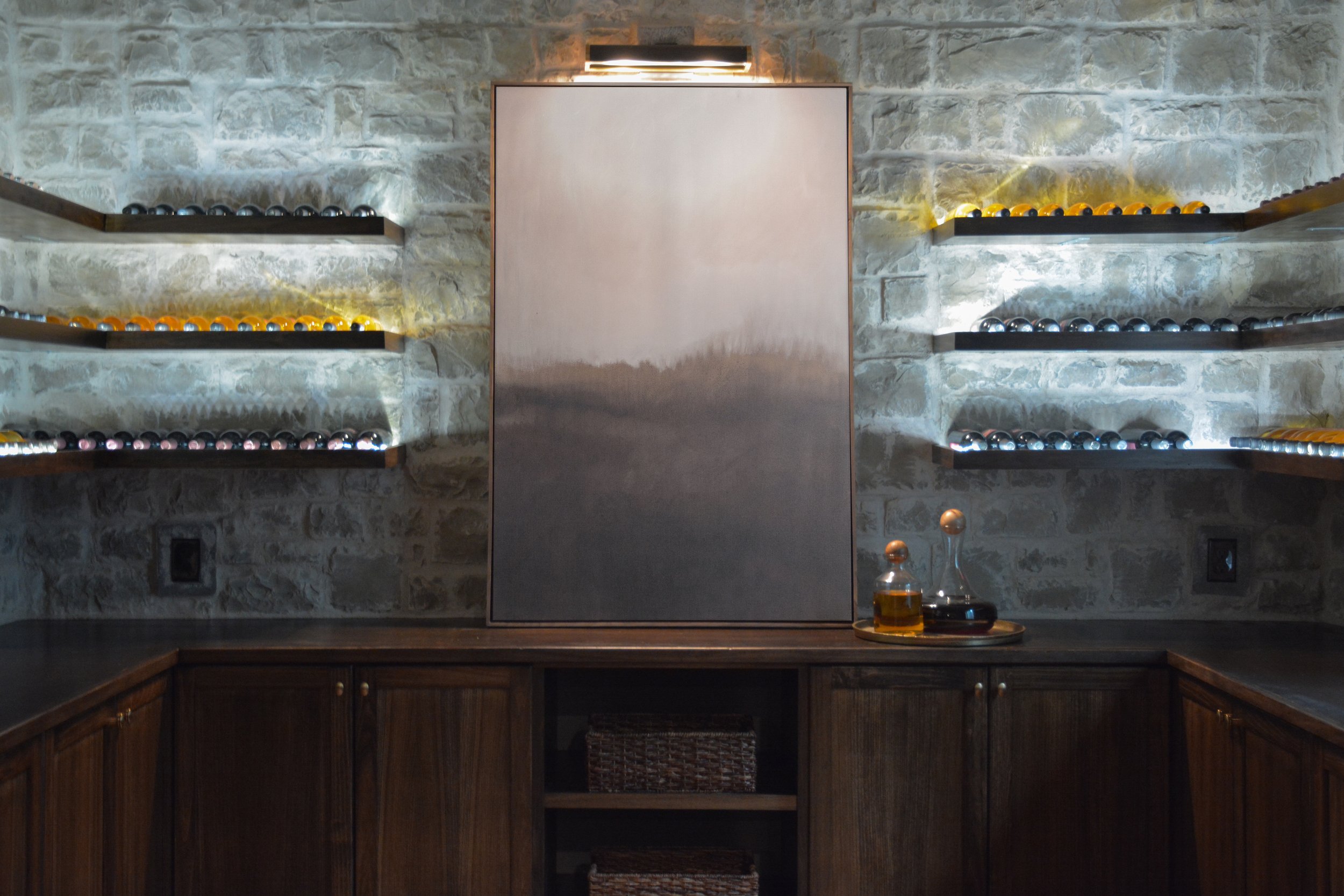
A custom basement wine display framed by textured stone and floating illuminated shelves. Integrated lighting highlights bottle storage while adding depth and atmosphere to the lower-level entertaining area. The combination of wood cabinetry, layered materials, and controlled illumination transforms storage into a refined architectural focal point.
Storage and Infrastructure: Planning for Real Life
Basements often carry the burden of housing storage, mechanical systems, utility access, and overflow functions. The challenge is incorporating these necessities without allowing them to dominate the overall experience of the space.
Thoughtful planning allows storage and infrastructure to exist quietly within the architecture rather than feeling visually disruptive. Built-in cabinetry, concealed doors, integrated shelving, and dedicated utility zones help maintain visual clarity while still supporting practical daily use.
Designing Around Mechanical Systems
HVAC equipment, electrical panels, sump systems, and water heaters are realities in most basements. Instead of treating these elements as afterthoughts, successful lower-level designs account for them early in the planning process.
Millwork solutions, partition walls, and strategic layout adjustments can help minimize their visual presence while preserving necessary accessibility. When infrastructure is integrated thoughtfully, the basement maintains a calm and cohesive atmosphere.
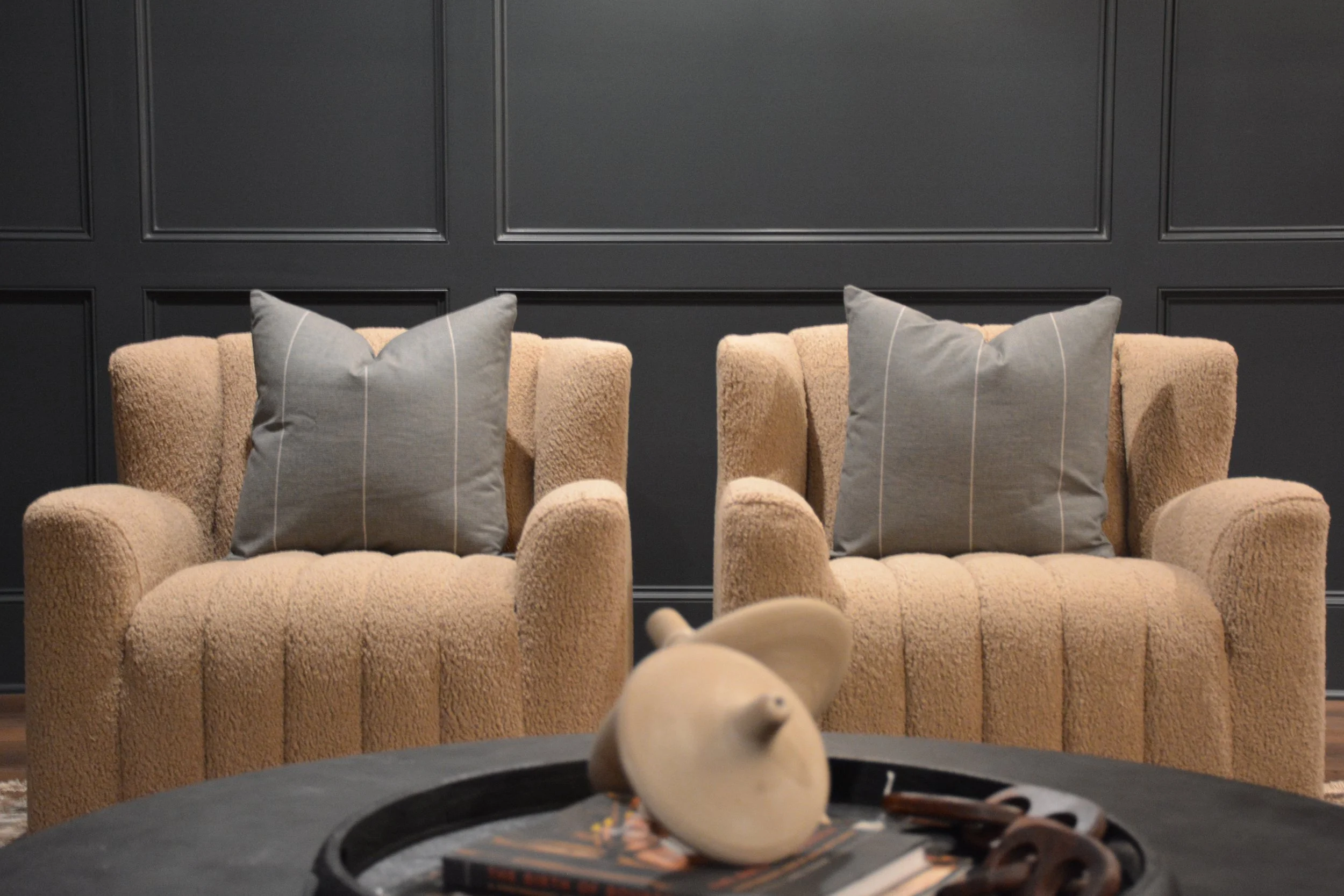
A pair of softly textured accent chairs positioned against architectural wall paneling creates a defined seating moment within the basement. Neutral pillows introduce subtle contrast while maintaining a cohesive palette. The symmetry and scale reinforce a composed, intentional lower-level layout.
Basement Uses That Add Long-Term Value
Beyond immediate functionality, a thoughtfully designed basement can add long-term value to the home when its uses remain adaptable over time. Trend-driven specialty rooms often lose relevance quickly, while flexible living spaces continue supporting evolving household needs.
Secondary family rooms, guest suites, wellness spaces, home offices, libraries, and entertainment lounges often provide the greatest longevity because they adapt naturally as lifestyles shift.
Guest Suites and Private Retreats
Guest suites within the basement can feel highly elevated when designed with the same level of care applied throughout the rest of the home. Lighting, sound control, storage, furnishings, and material selection all contribute to comfort.
Privacy often becomes an advantage in lower-level guest accommodations, particularly when paired with a dedicated bathroom, lounge area, or workspace.
When guests feel genuinely comfortable, the basement no longer feels secondary.
Work-From-Home and Creative Spaces
Basements can also support focused work, creative pursuits, or quiet retreat when acoustics and lighting are planned carefully. Offices, studios, libraries, and hobby spaces often benefit from the separation and controlled atmosphere lower levels naturally provide.
As remote work continues influencing residential design, these types of basement uses remain highly relevant and valuable.
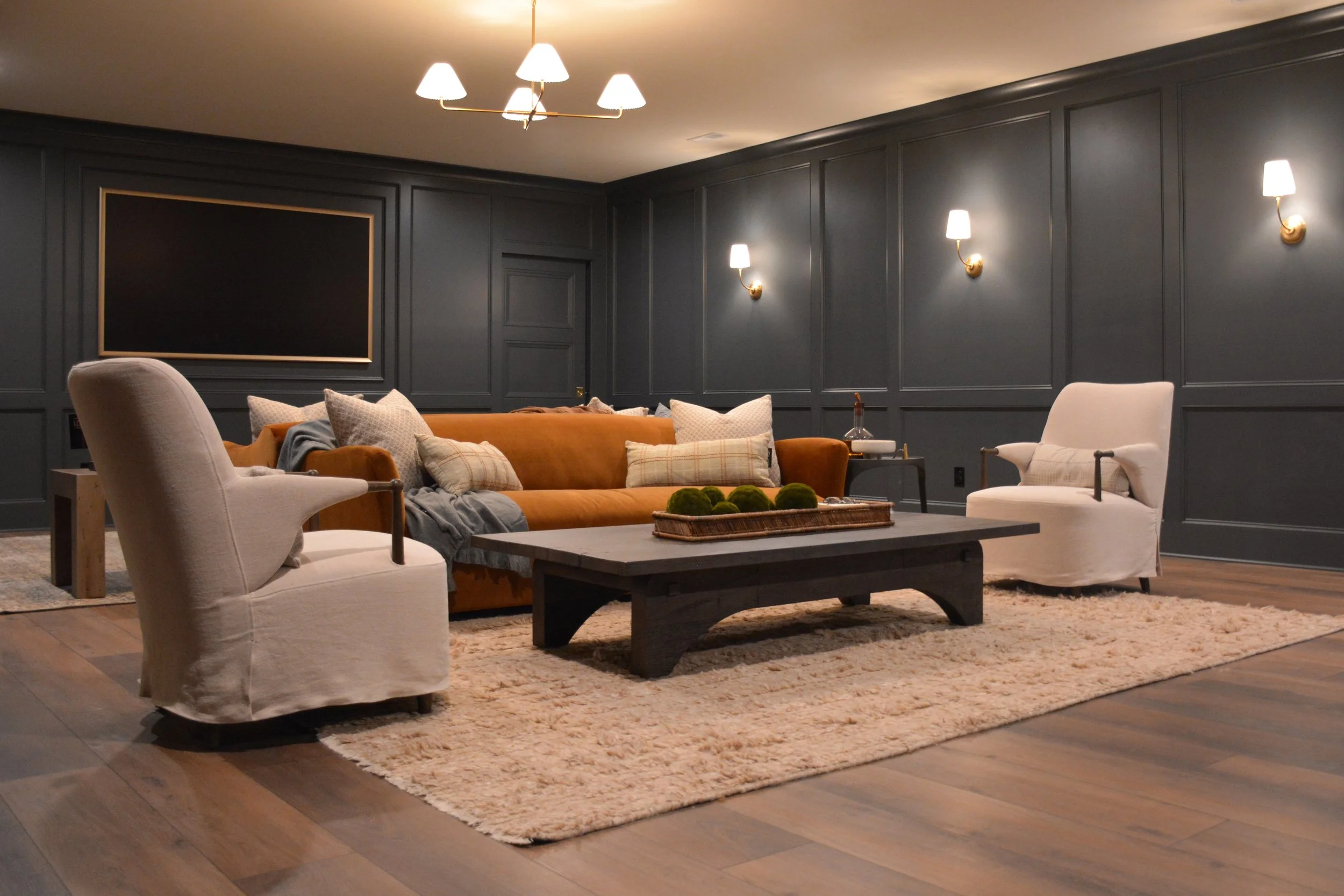
Architectural wall paneling establishes structure throughout this lower-level living space, complemented by warm brass sconces and layered seating. A rust-toned sofa anchors the room, while neutral armchairs soften the composition. The balance of scale, lighting, and materials ensures the basement reads as a cohesive extension of the home.
Sound, Comfort, and Environmental Control
Acoustics play a major role in how comfortable a basement feels, particularly in media rooms, entertainment spaces, and open-concept lower levels. Soft finishes, rugs, upholstered furniture, drapery, and acoustic treatments help absorb sound and create a calmer environment.
Temperature and humidity control are equally important. Proper insulation, dehumidification systems, and quiet HVAC performance protect both comfort and long-term material durability.
Designing for Quiet Performance
The most successful basements function quietly in the background. Doors close softly, systems operate unobtrusively, and the overall environment feels stable and comfortable throughout the year.
When performance details are resolved early in the planning process, the design itself can remain understated and calm.
This type of invisible functionality often separates a basement that simply exists from one that feels fully integrated into the overall home.
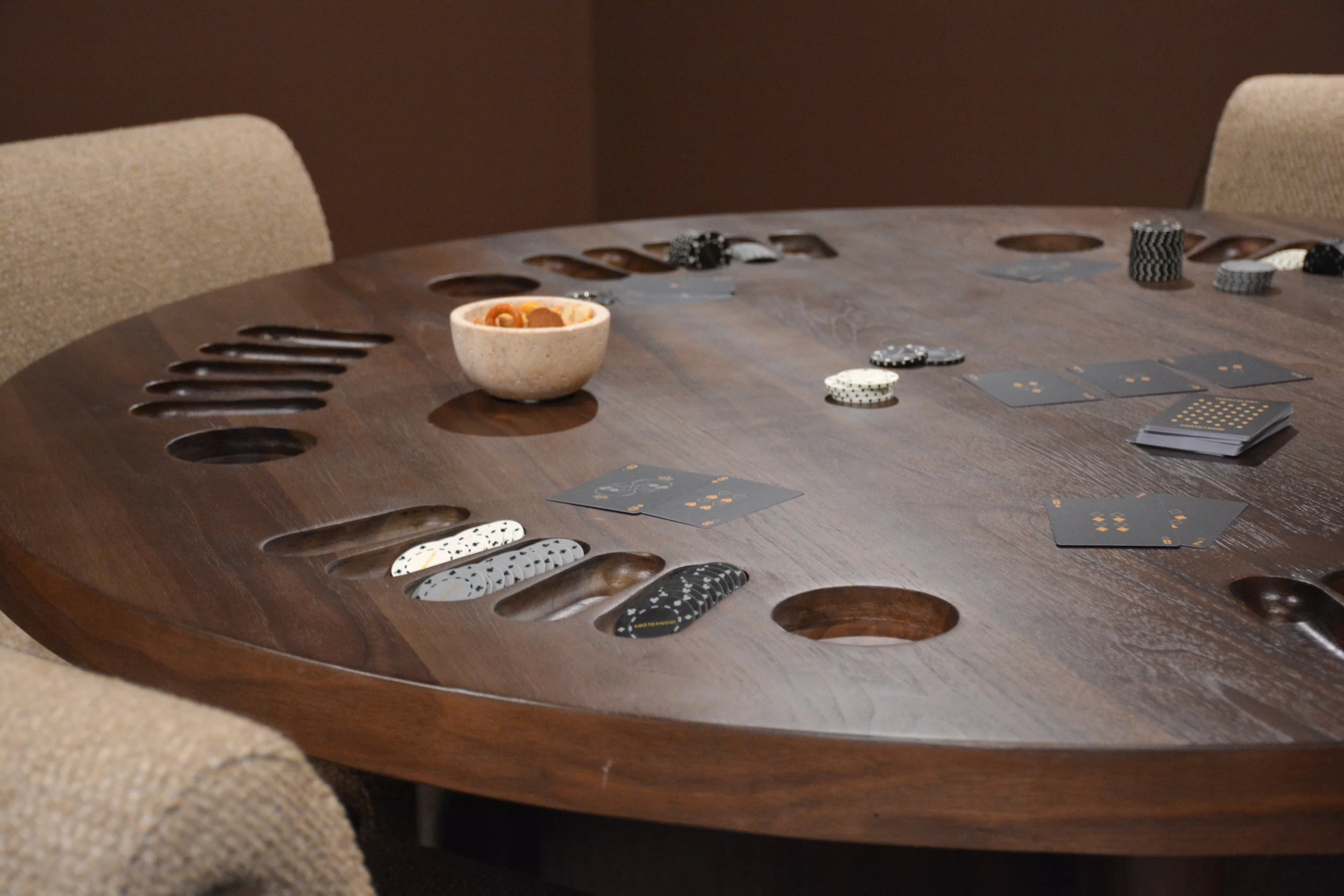
A custom-designed round game table crafted in rich wood with integrated chip trays and card slots. The built-in details support entertaining while maintaining a refined, furniture-quality presence. Thoughtful additions like this elevate the basement from casual recreation space to a fully considered gathering area.
Connecting the Basement to the Rest of the Home
A basement should feel connected to the home’s broader architectural language rather than disconnected from it. Consistency in materials, finishes, color palette, and detailing helps the lower level feel intentional and cohesive.
This does not mean duplicating every finish exactly. Instead, the goal is maintaining continuity while still allowing the basement to establish its own identity.
Stair Design and Visual Transition
The stair sequence plays a significant role in setting expectations for the lower level. Lighting, wall treatments, proportions, and material continuity along the stair can ease the transition between levels while reinforcing the home’s overall design language.
Repeating select finishes or tones from the upper floors creates familiarity, while introducing slightly moodier or more intimate elements below grade can help the basement feel layered rather than repetitive.
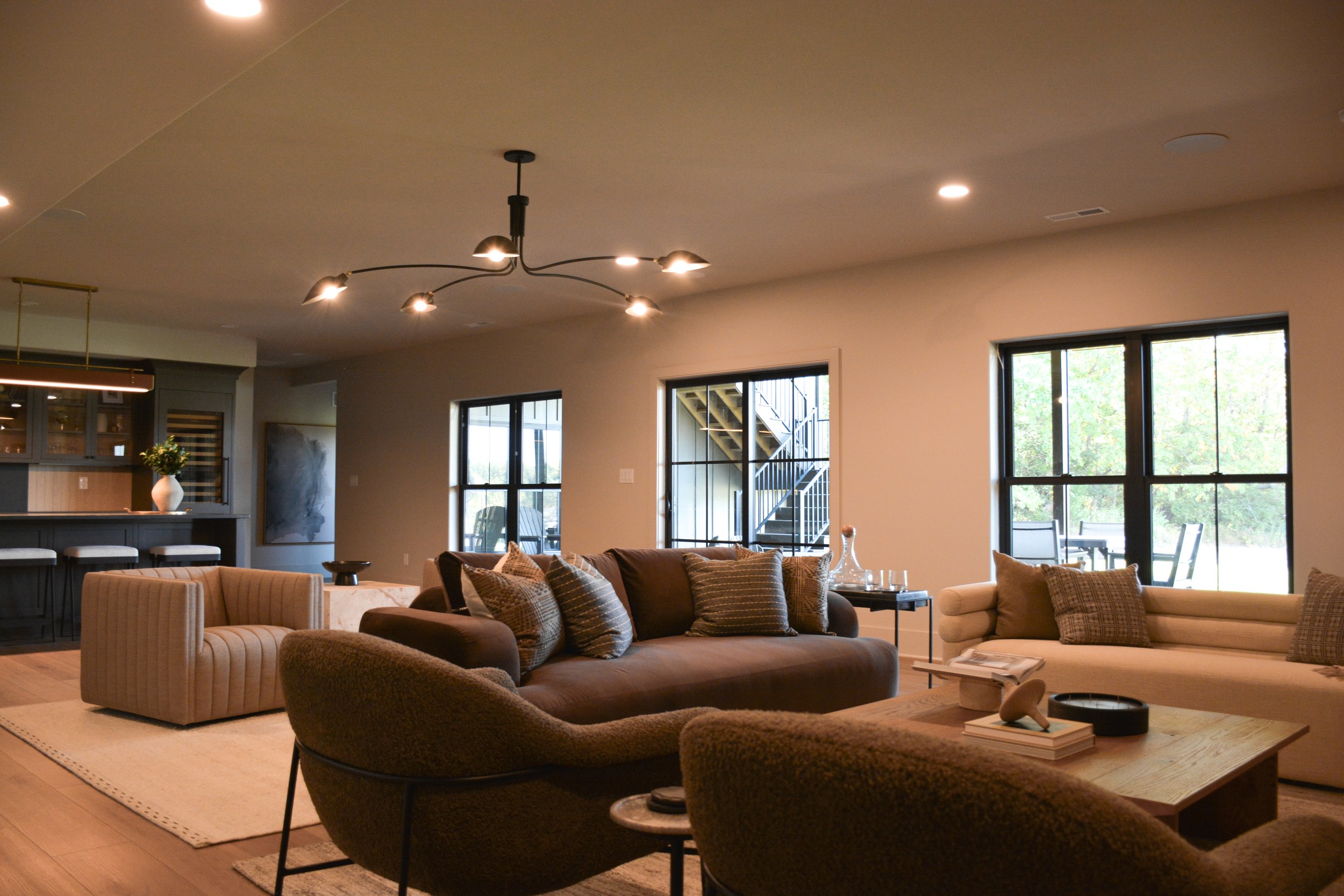
A light-balanced lower-level lounge defined by sculptural ceiling lighting and layered seating. Large windows and controlled illumination prevent the space from feeling enclosed, while neutral upholstery softens the architectural lines. The result is a basement that feels integrated with the rest of the home.
Planning the Basement as Part of a Long-Term Strategy
Whether finished immediately or planned as a future phase, the basement benefits from early consideration during renovation or construction planning. Establishing a long-term vision allows structural decisions, lighting infrastructure, HVAC planning, and utility coordination to support future use even if finishes are completed later.
This phased approach often reduces disruption, improves efficiency, and helps ensure the lower level evolves cohesively alongside the rest of the home.
A Basement That Feels Finished, Not Secondary
A thoughtfully designed basement is not defined by its location below grade, but by the quality of its planning. When layout, lighting, materials, storage, comfort, and long-term functionality are considered together, the lower level becomes a true extension of the home rather than a space people reluctantly use.
At Studio Nine Interiors, basement design is approached with the same editorial eye and practical understanding applied throughout the rest of the house. The result is a lower level that feels grounded, livable, refined, and intentionally connected to daily life.
To explore how Studio Nine creates cohesive interiors throughout the home, review the portfolio, learn more about the studio’s interior design services, or connect with the team directly to begin planning your own lower-level transformation.