
A Bathroom That Feels Like a Retreat: Spa-Inspired Design with Studio Nine Interiors
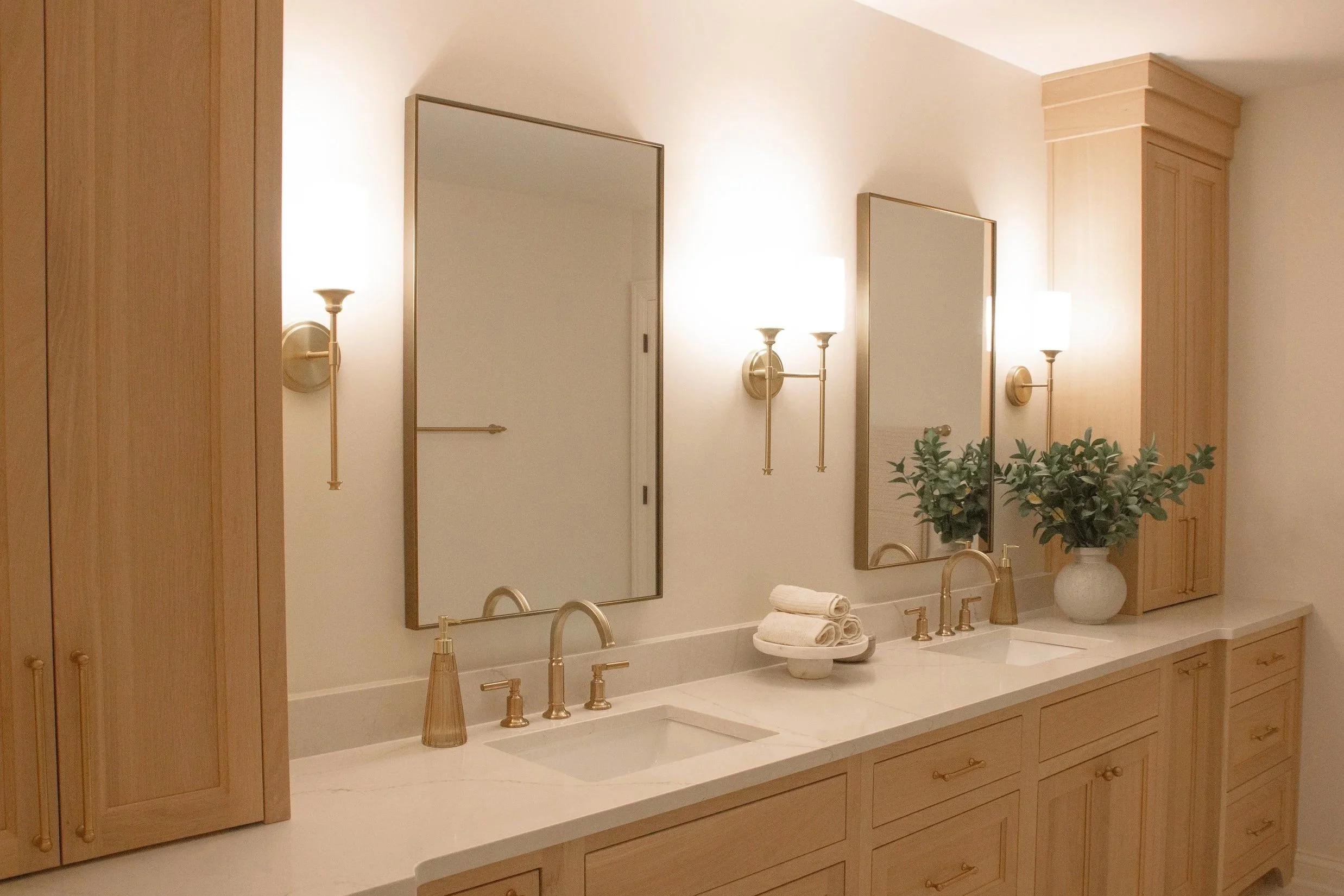
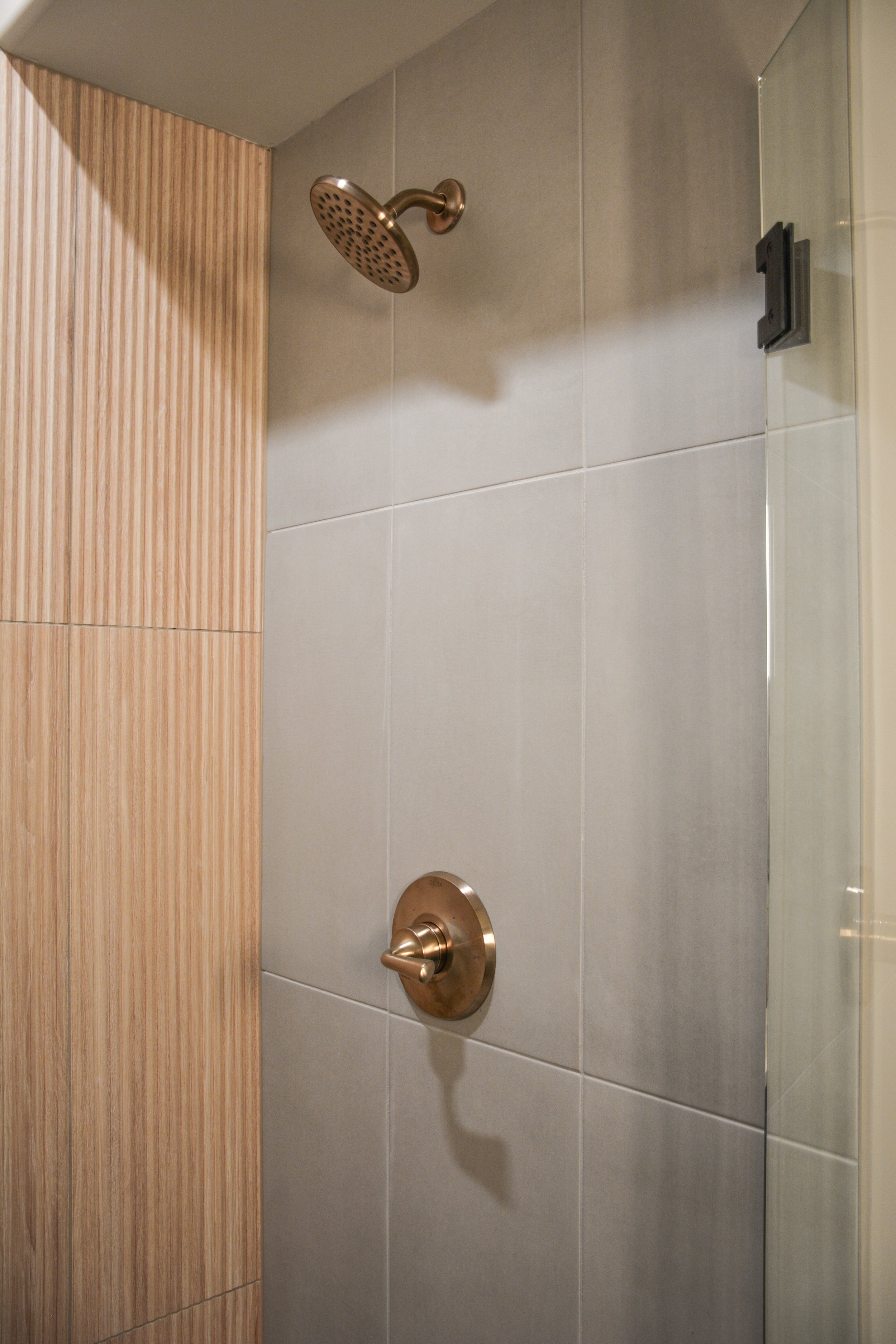
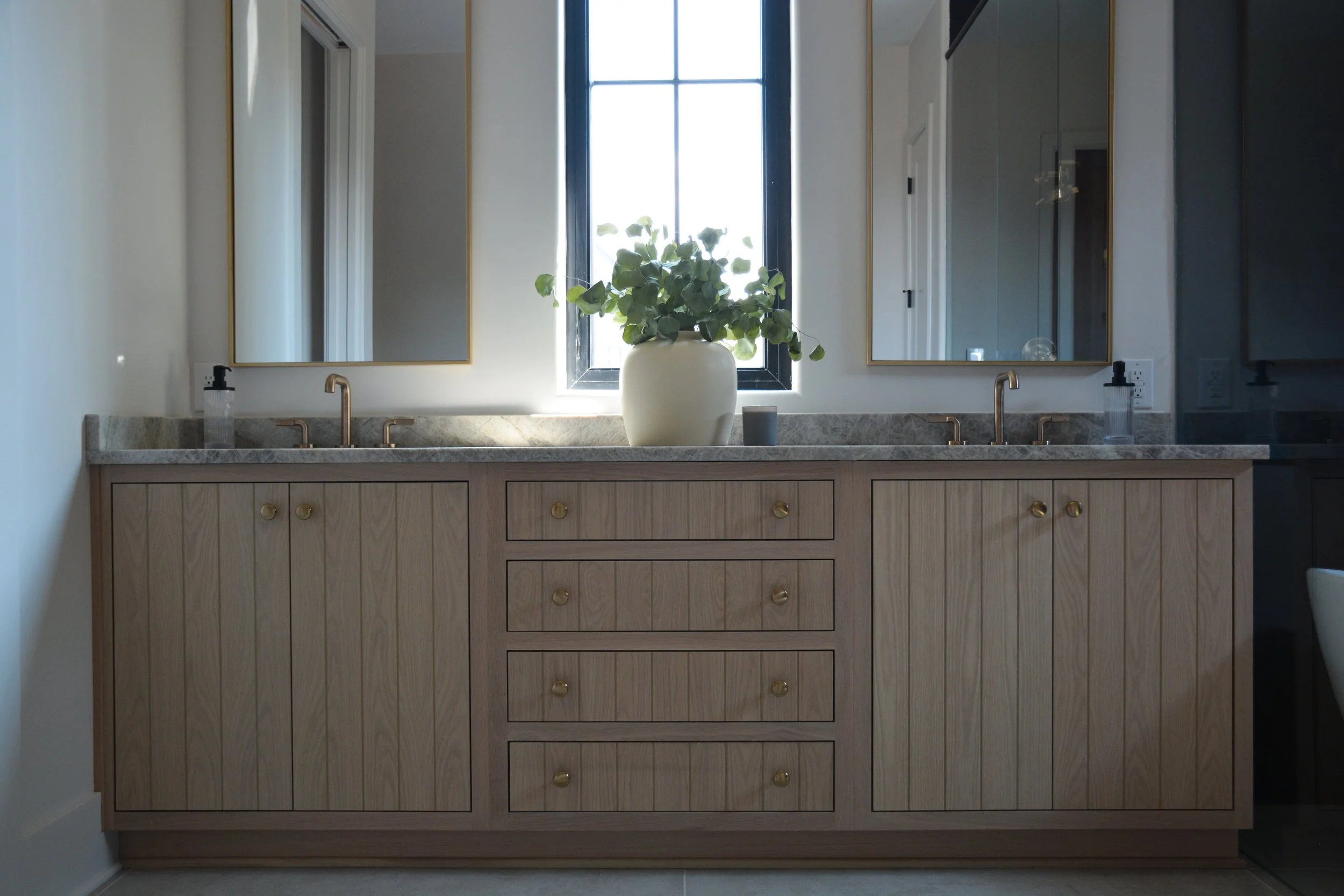
This bathroom illustrates how material restraint can define the experience of a space. Light wood tones soften the architecture, while stone countertops and subtle brass details add warmth without visual noise. When finishes are chosen for compatibility rather than contrast, the room feels settled and enduring—an environment designed to remain comfortable and relevant as the home evolves.
Dream Bathrooms: A Spa-Inspired Renovation That Feels Considered
A bathroom can look beautiful and still feel restless. The difference between a “nice” renovation and a truly restorative retreat usually comes down to composition: proportion, material authenticity, lighting control, and the discipline to leave unnecessary elements out. A spa-inspired bathroom is not a theme or a checklist, and it rarely comes from a single bold choice. It comes from quiet decisions made consistently, where every surface and detail supports calm.
This is especially important for a first-round renovation plan, because bathrooms have a way of forcing decisions quickly. Tile, plumbing locations, ventilation, and lighting all lock into place early, and small missteps become daily frustrations. A studio-led interior design approach protects the experience of the room, not just the look of it. When it’s done well, the bathroom becomes the most personal “reset space” in the home, and it carries the same level of intention you see throughout Studio Nine’s portfolio of completed projects.
Start with the Feeling, Not the Finish
The most successful bathrooms begin with a mood and a cadence. Some clients want a bright, crisp space that feels energizing in the morning, while others want low-glow lighting and warmer materials that slow the pace at night.
The design language should follow that preference all the way through the room, from the tile finish to the hardware sheen. A spa-like result is not achieved through luxury items alone, but through a consistent atmosphere that feels calm from every angle.
This early clarity also prevents the common mistake of mixing competing ideas. A bathroom can feel cold if every selection skews hard modern, and it can feel cluttered if every surface becomes a “moment.”
Define the Daily Ritual
A bathroom should reflect how it will actually be used. A primary bath with two schedules moving through it needs different priorities than a guest bath that serves occasional visitors. Grooming, bathing, storage, and circulation should be mapped around real habits, not default assumptions.
When daily flow is respected, the space feels effortless, and the design becomes supportive instead of performative.
This is also where you decide what “spa-like” means for you. For some, it’s a soaking tub and quiet lighting. For others, it’s a shower built around comfort: bench seating, generous niches, and a controlled spray experience that feels steady and restorative. The right direction becomes obvious once the ritual is defined, and it becomes easier to align the rest of the plan with Studio Nine’s full-service process rather than letting the project drift into individual, disconnected choices.
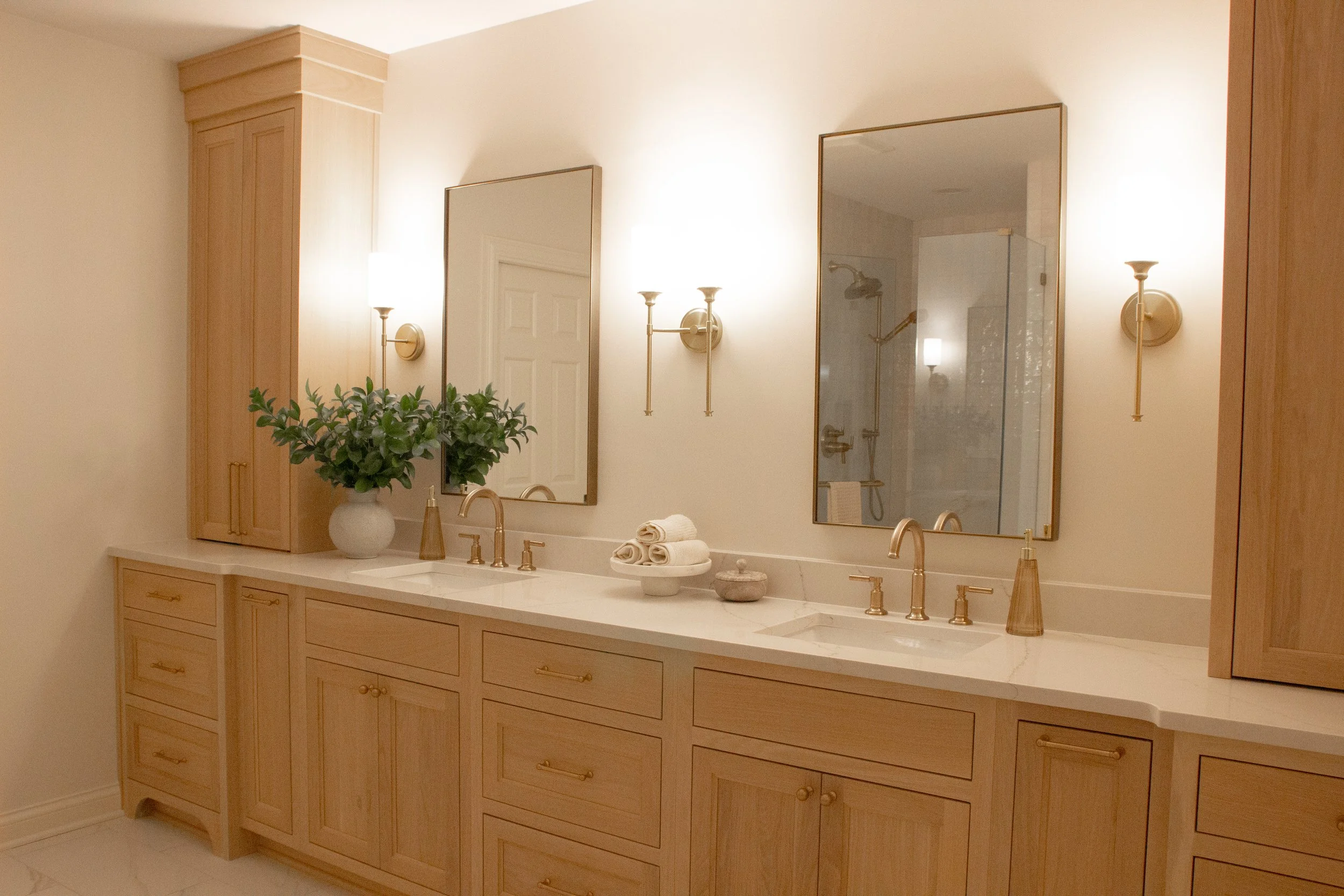
Shared spaces benefit from clarity and balance. Dual sinks, generous storage, and consistent lighting allow routines to unfold without friction, even when schedules overlap. When layout and materials are aligned with how the space is actually used, the experience feels steady, supportive, and quietly refined rather than performative.
Layout That Creates Calm
Bathrooms often fail because the layout is treated as fixed, even when walls are moving and plumbing is being reworked. A spa-inspired plan prioritizes open sightlines, comfortable clearances, and a sense of arrival. The room should not feel like a series of obstacles or tight turns. Even modest square footage can feel expansive when the layout is edited thoughtfully, and when the design supports the way the room is entered, used, and exited.
A strong layout also protects future decisions. When plumbing locations are placed with intention, the room supports better vanity design, more elegant shower enclosures, and lighting that reads as architectural rather than decorative. Layout is the framework that makes every other choice feel more refined, and it’s one of the areas where a studio-led design approach makes the biggest difference early—before the construction calendar starts compressing decisions.
Shower and Tub Placement as Focal Strategy
If a tub is part of the plan, it should feel deliberate rather than leftover. Freestanding tubs work best when they have breathing room and a clear relationship to the architecture—natural light, a simple wall plane, or a framed view. When the tub feels “parked,” the room loses its calm, even if every other selection is elevated.
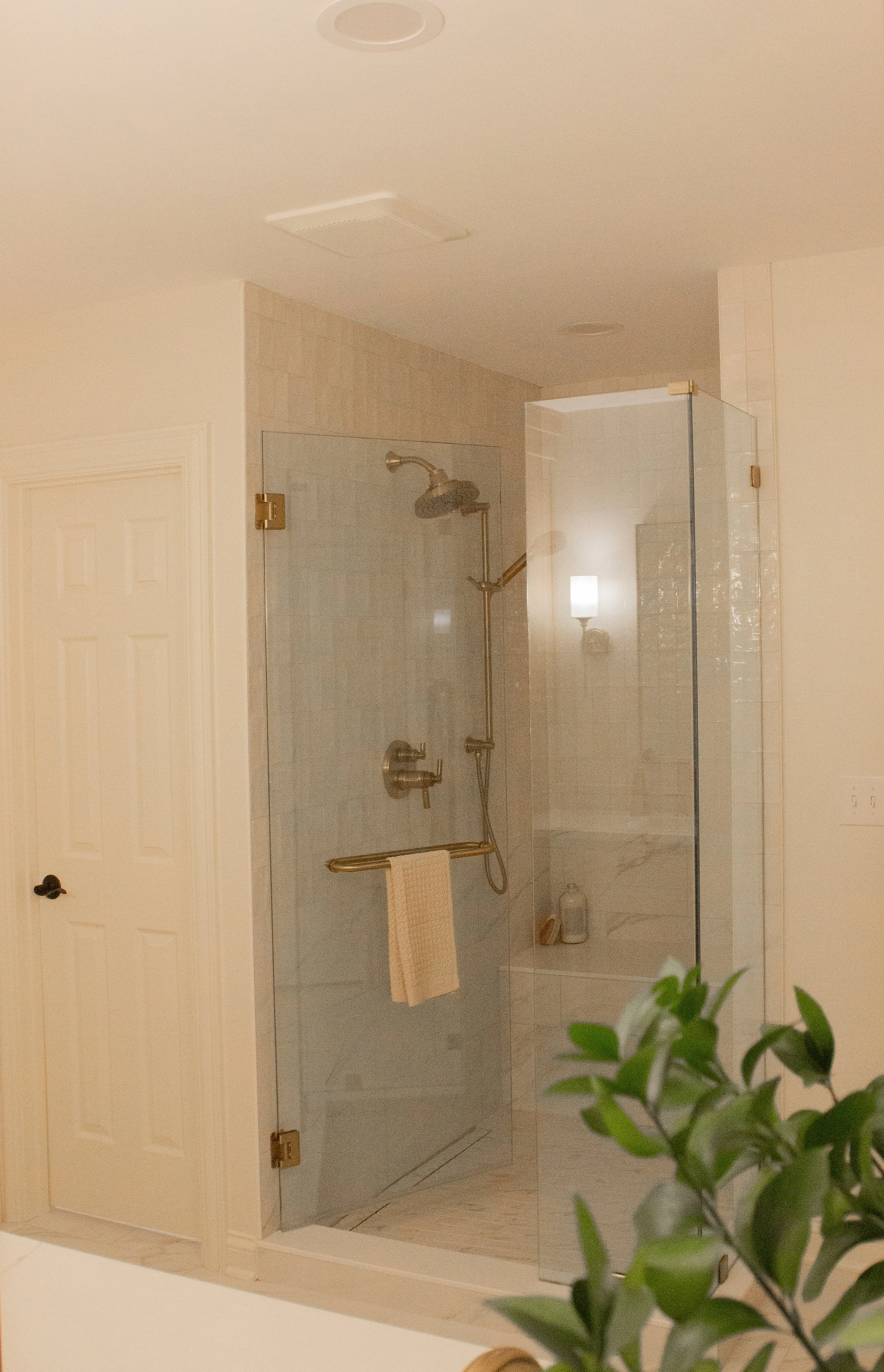
A shower can carry focal weight as well, especially when tile transitions, glass detailing, and hardware placement are handled with restraint.
The focal should be singular, not scattered. A bathroom becomes visually noisy when the tub, vanity, lighting, and tile all compete for attention. Selecting one primary focal element allows the rest of the room to recede into quiet support, which is part of what makes the strongest spaces in Studio Nine’s work feel resolved rather than busy. When the focal strategy is clear, the bathroom reads like a private retreat instead of a showroom.

Vanity Scale and Sightlines
Vanity design is less about trends and more about proportion. A vanity that is too deep, too tall, or too visually heavy can collapse the perceived space and make the room feel crowded.
A spa-inspired bathroom often benefits from a vanity composition that feels lighter—either through floating forms, simplified door profiles, or an edited material palette that repeats elsewhere in the room.
The goal is to keep the room feeling open and intentional, even when the bathroom needs to store a lot.
Sightlines matter here as well. If the vanity is the first thing you see when entering, it should read calm and resolved, with storage planned so the countertop can stay clear. Visual clutter on countertops usually signals that storage planning has been under-considered, not that the client is “messy.” When the vanity is sized appropriately and storage is integrated, the bathroom becomes quieter instantly, and the overall design feels more cohesive.
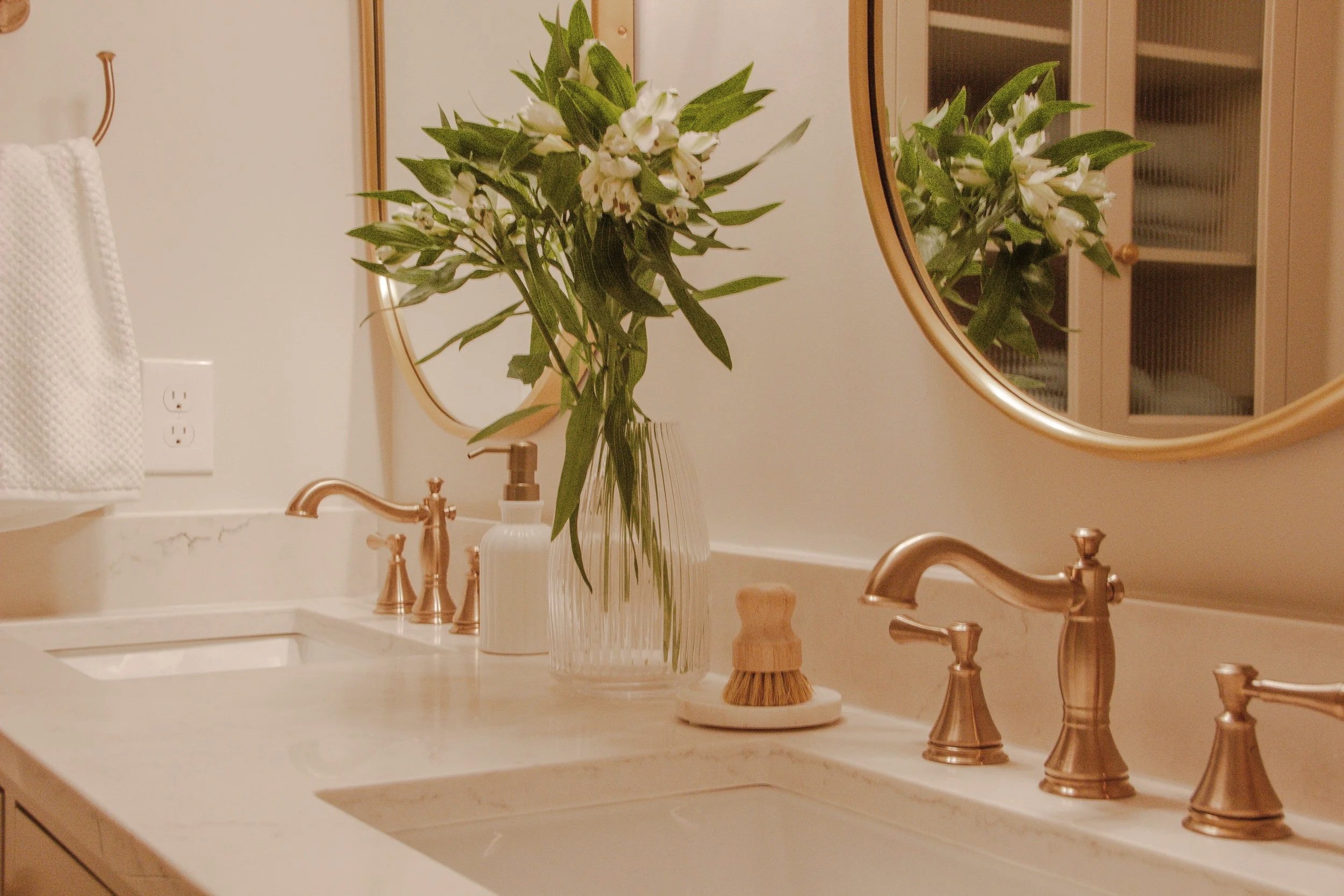
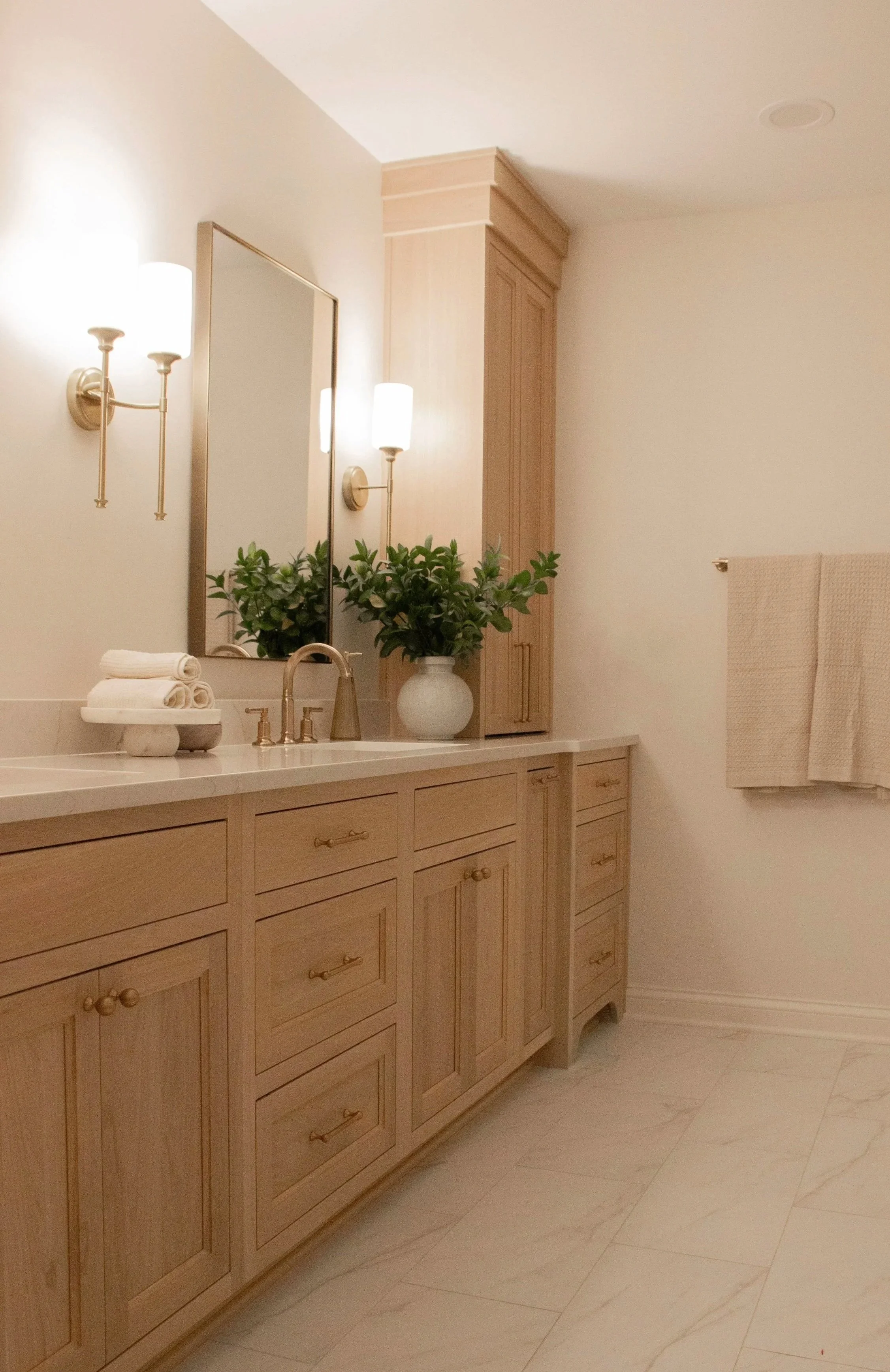
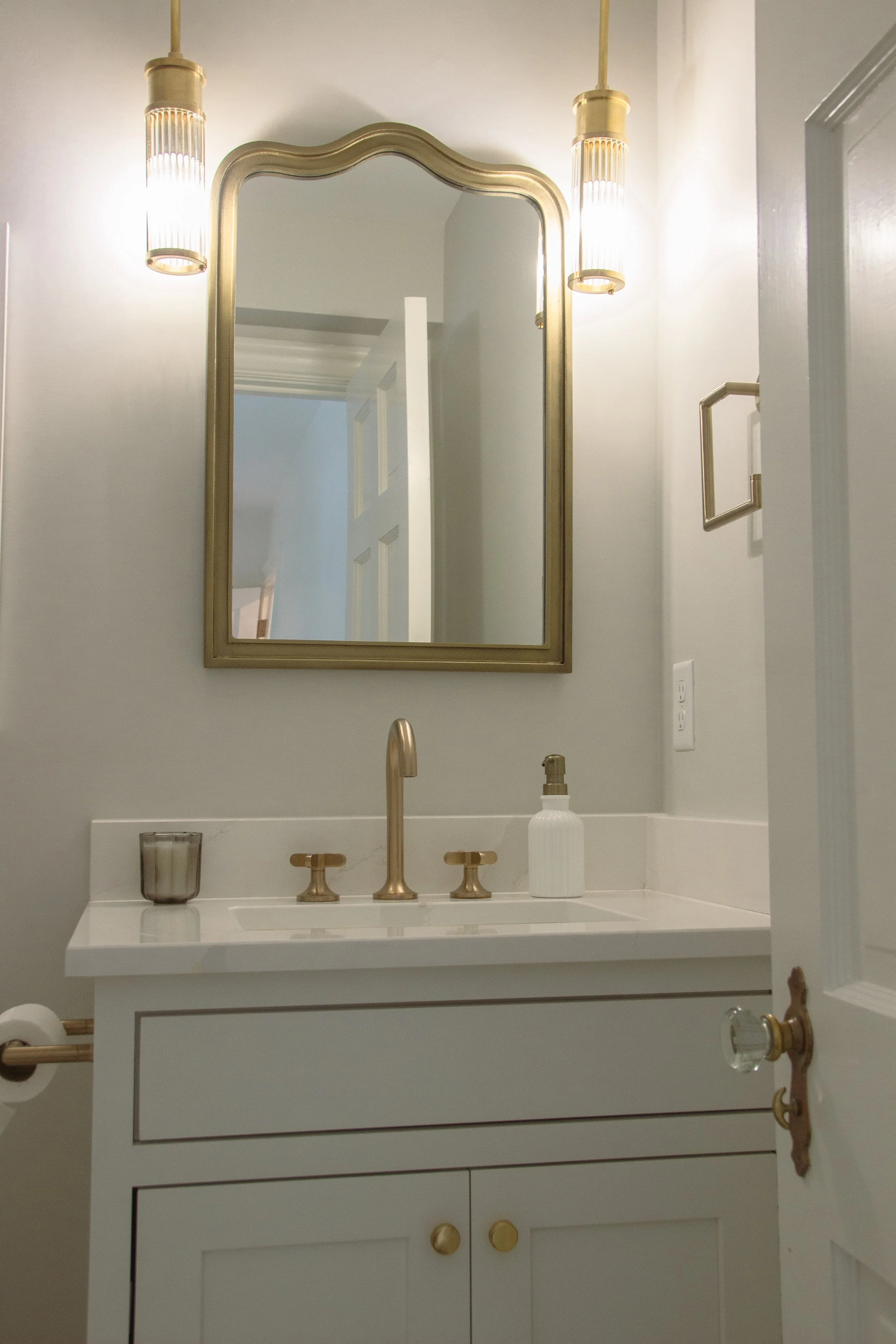
Small details carry more weight when the overall design stays edited. Repeating finishes, limiting accessories, and choosing objects with simple forms help the vanity feel calm rather than styled. When surface elements are intentional and restrained, the space remains visually quiet and supports the larger design language instead of competing with it.
A Restrained Color Palette That Still Feels Warm
Bathrooms are often over-brightened or over-cooled in the name of “clean.” The more elevated approach is to find warmth inside a restrained palette: soft stone, warm white, muted clay, gentle greige, and tonal layers that read calm in both daylight and evening light. The best palettes don’t shout; they settle. They create a background where texture and form become the interest, and where the room feels like it belongs to the home rather than standing apart from it.
Instead of introducing contrast through high-contrast paint choices, consider contrast through finish. Matte against honed stone, soft plaster against crisp porcelain, warm wood against cool tile—these transitions create depth without visual noise. A bathroom becomes more spa-like when the palette is consistent and the detail work carries the sophistication. If you’re building a whole-home direction, exploring Studio Nine’s project gallery can help clarify how restraint can still feel layered and personal.
How Light Changes Color in Bathrooms
Bathrooms are one of the most lighting-sensitive rooms in a home. Cool LEDs can flatten paint colors and make stone feel sterile. Warm lighting can make whites read creamy and inviting, but it needs calibration to avoid yellowing.
Testing samples under the actual lighting plan is not optional if you want the space to feel consistently calm, especially when materials include reflective tile, glass, or polished metals.
Natural light introduces its own variability, shifting tone across the day. A color palette should be selected with those shifts in mind, ensuring that the room feels equally resolved in the morning and at night. When lighting and color are designed together, the room reads intentional instead of accidental, which is one of the strongest indicators of an elevated renovation.
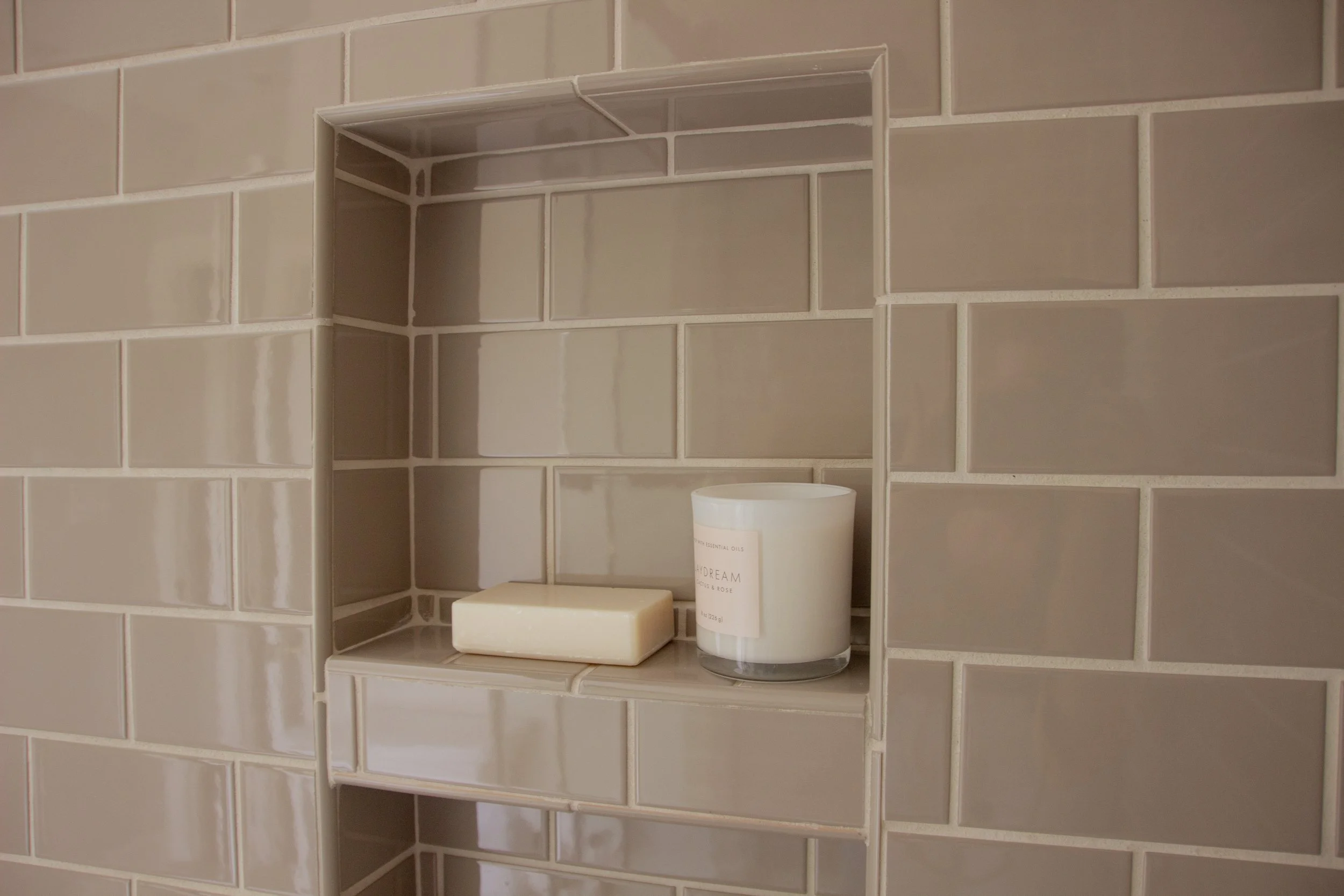
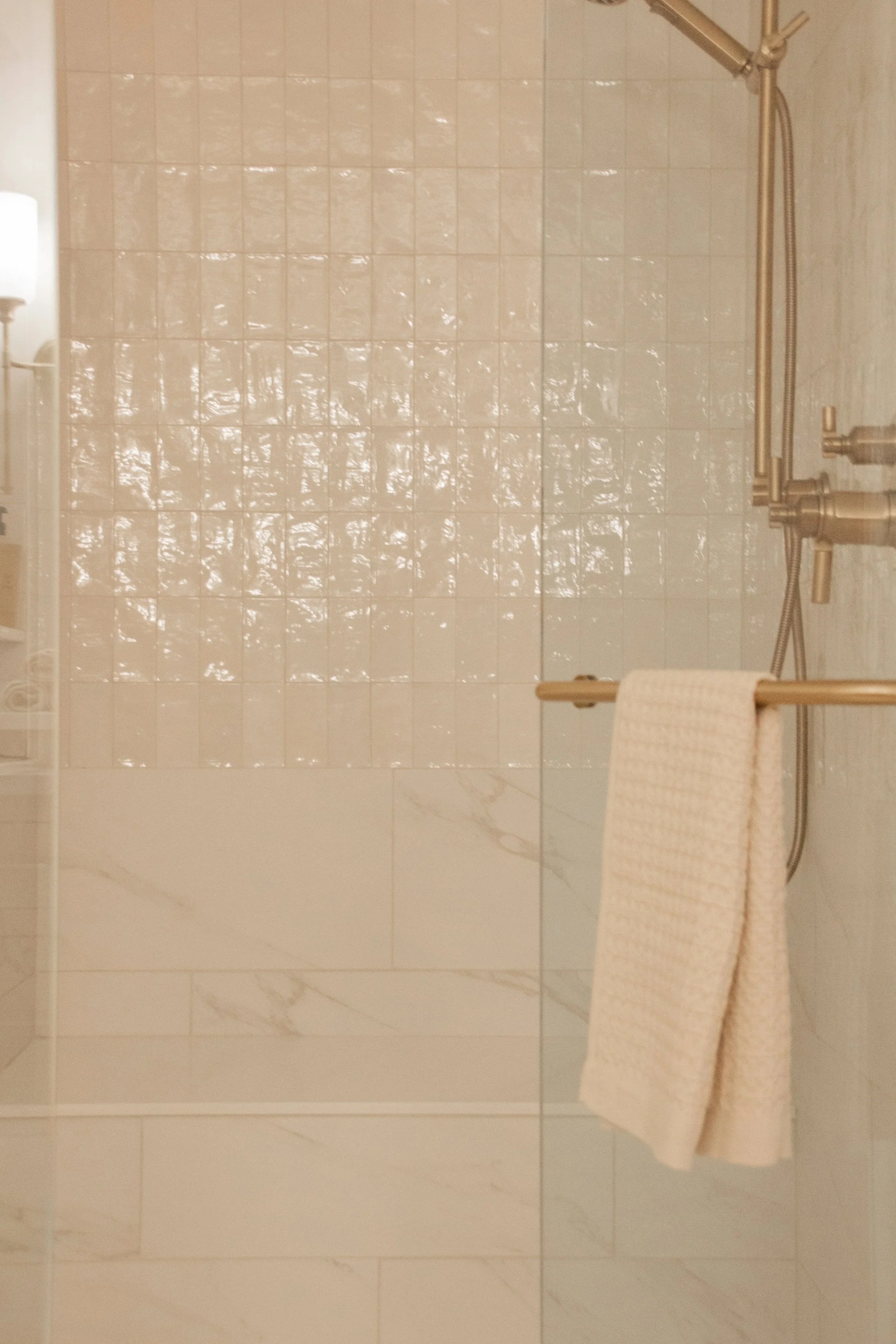
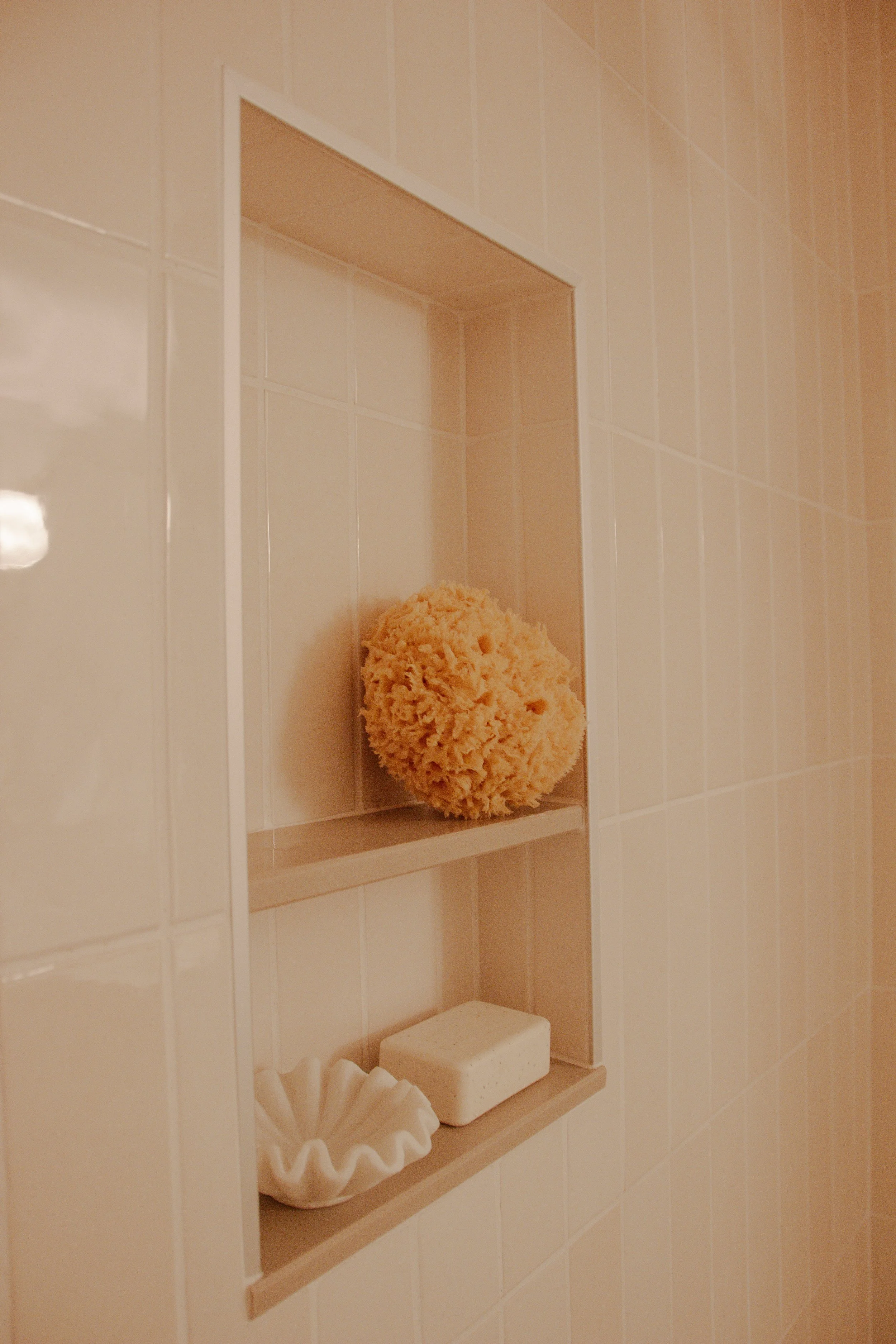
Built-in elements should feel like part of the original surface, not an interruption. A recessed niche maintains clean sightlines and keeps storage off the ledge, while matching tile and consistent grout spacing preserve visual continuity. When details are handled with restraint, functionality increases without adding visual noise, and the materials read as calm, durable, and intentionally composed.
Material Integrity: Surfaces That Age Gracefully
Spa-like bathrooms rely on materials that feel grounded and real. Natural stone, honed tile, warm woods, and tactile plaster finishes create an atmosphere that is calm without feeling flat. The goal is not luxury for its own sake, but longevity and sensory comfort. Materials that age well make the space feel better over time, not more dated, and they help the bathroom stay visually quiet even as the home evolves.
A refined bathroom typically uses fewer materials, repeated thoughtfully. This repetition creates cohesion, and cohesion is what reads “high-end.” When every surface changes, the room becomes visually fragmented. When materials are edited and repeated, the space feels composed—an approach you’ll notice across Studio Nine’s completed interiors, where the strongest rooms often rely on a controlled number of finishes and a careful balance of texture.
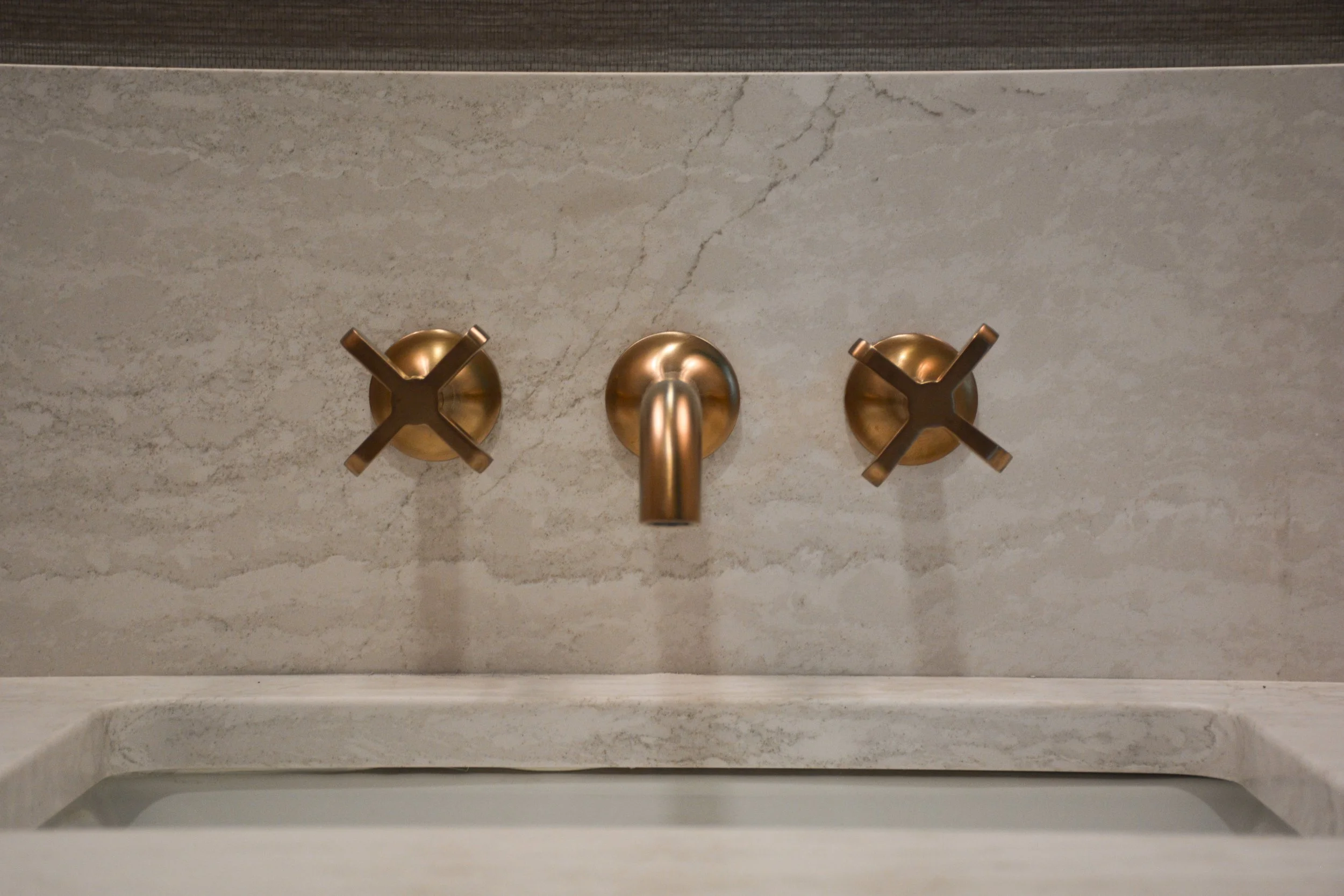
Limiting the number of finishes allows individual elements to carry more presence. Stone provides a quiet, grounding backdrop, while warm metal introduces definition through form rather than excess detail. When hardware placement is deliberate and materials are allowed to speak on their own, the result feels composed, durable, and visually balanced rather than layered for effect.
Tile Strategy: Where to Go Quiet, Where to Add Interest
Tile should support the architecture, not fight it. Large-format tile can reduce grout lines and create a more seamless plane, while smaller tile can introduce texture in a shower floor or niche area. The most sophisticated tile plans avoid over-patterning and instead use subtle shifts in scale, orientation, or finish to build depth. The goal is to let the surface read as a calm backdrop rather than a loud feature.
Transition details matter just as much as the tile itself. Trim profiles, edge finishing, and grout tone all influence the final read. A spa-inspired result often comes from choosing grout that blends rather than contrasts, allowing the surface to feel continuous and calm. When these details are decided early, the tile plan becomes a foundation for the room instead of a distraction.
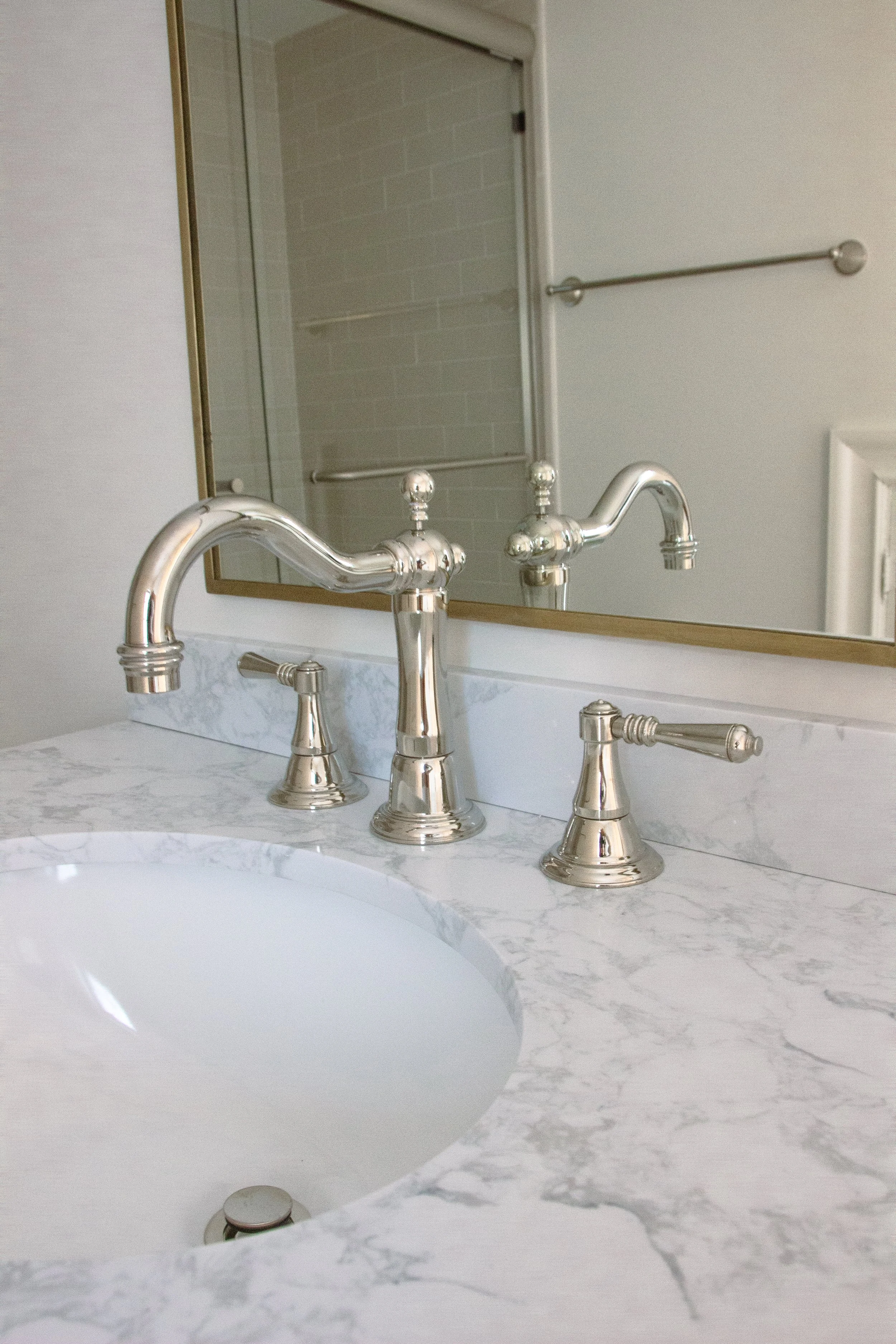
Stone, Quartz, and the Countertop Conversation
Countertops should be chosen as part of the full material story. A dramatic slab can be beautiful, but in a spa-inspired bathroom it often works best when the surrounding elements are quieter. Veining, sheen, and edge profile all play a role in whether the surface reads timeless or trend-driven.
A restrained edge and an edited slab usually feel more elevated than an ornate profile, especially when the goal is calm rather than spectacle.
Durability matters, but so does the way the material behaves in light. Honed stone softens reflections and can feel calmer, while polished surfaces increase reflectivity and visual “activity.” The best choice depends on the mood you want the room to hold, and on how the countertop will interact with nearby metals, mirrors, and lighting. When those relationships are considered, the countertop becomes part of the room’s composition rather than a standalone statement.
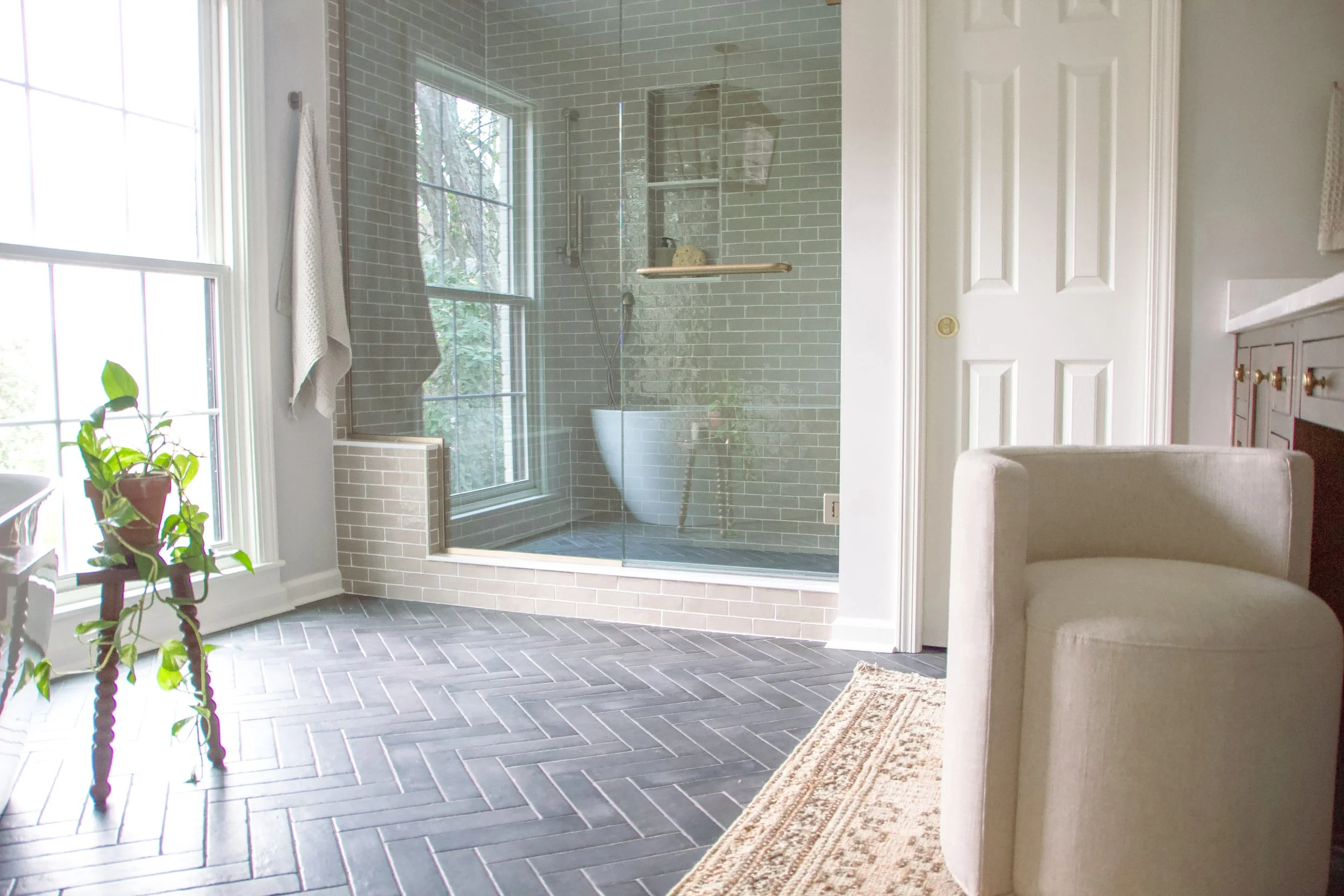
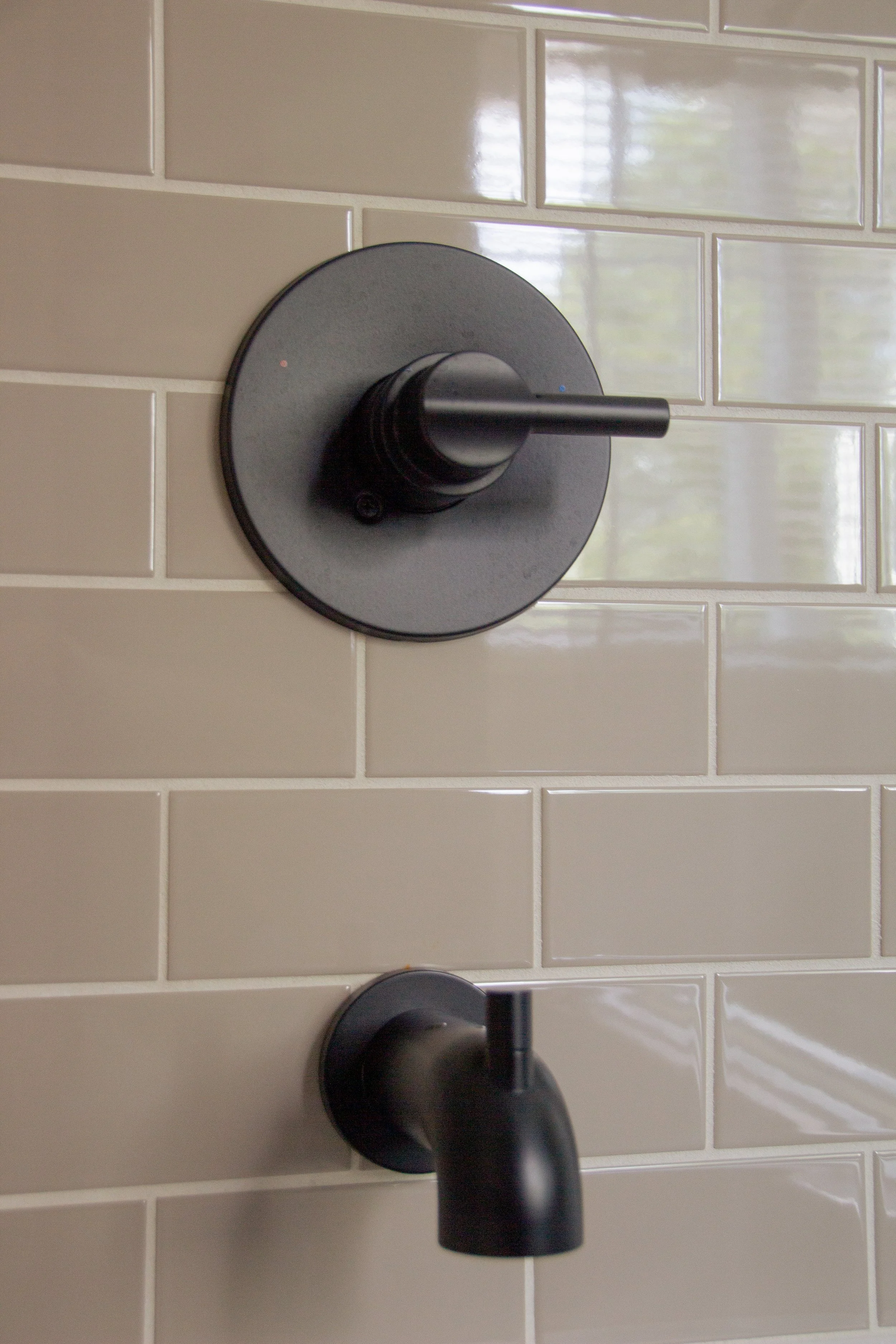
Generous spacing and uninterrupted views contribute as much to calm as material selection. Glass enclosures, consistent flooring patterns, and minimal visual barriers help the room feel expansive and composed. When fixtures and hardware remain understated, attention shifts to light, proportion, and flow—elements that define a space designed for daily ease rather than visual impact alone.
Fixtures and Hardware as Quiet Jewelry
Fixtures and hardware should feel deliberate, not decorative. A spa-like bathroom often benefits from a limited number of metal finishes used consistently throughout. When finishes multiply—mixing chrome, brass, black, and nickel without intention—the room starts to feel unsettled. A consistent metal story reads confident and composed, and it allows the materials around it to feel more intentional.
Luxury also shows up in performance. Hardware that feels solid, valves that operate smoothly, and fixtures that deliver consistent water pressure improve daily life in ways that are easy to underestimate. The best bathrooms feel good to use, not just good to photograph, and that user experience is a meaningful part of Studio Nine’s interior design services approach: making decisions that elevate day-to-day living as much as the final aesthetic.
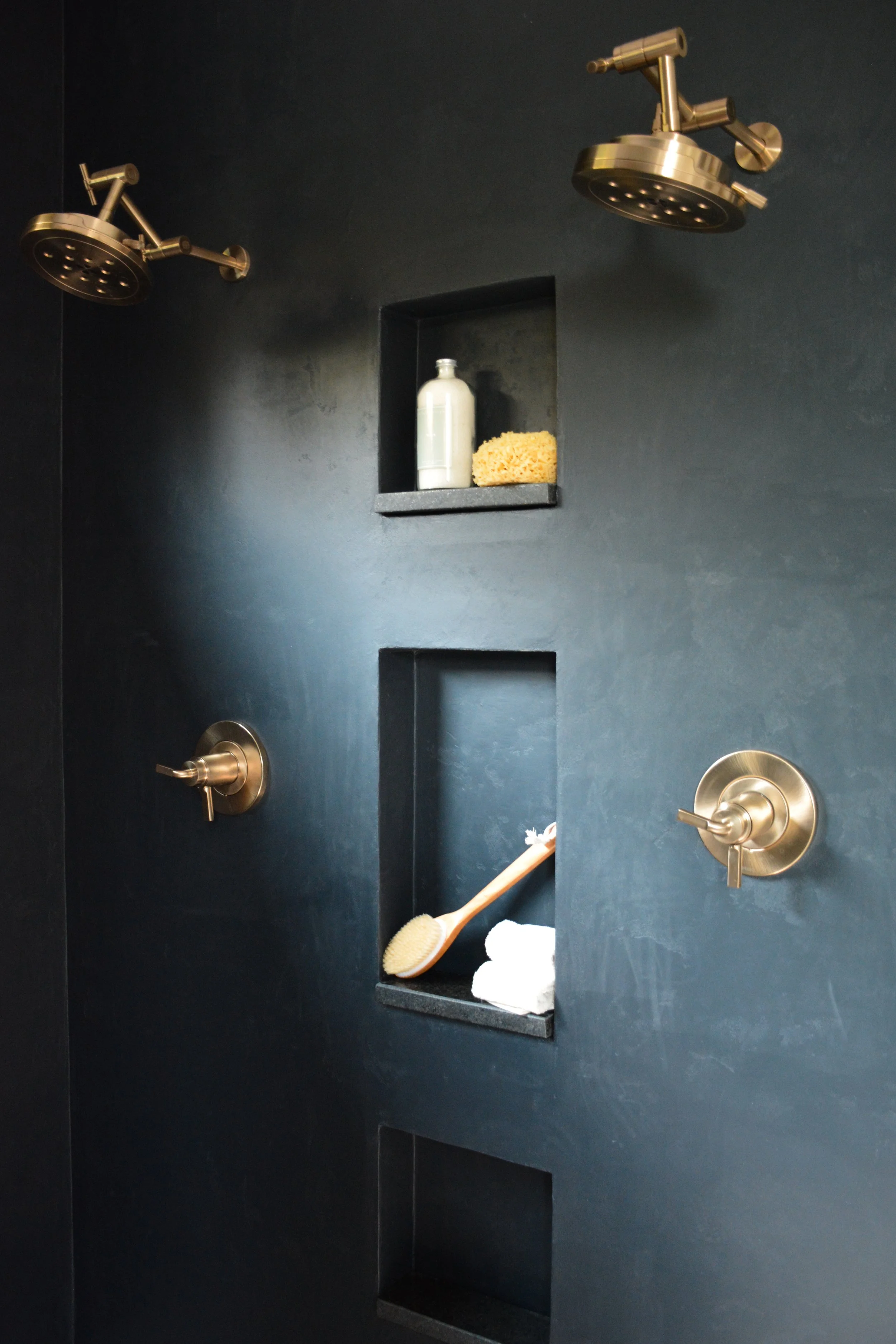
Choosing a Metal Finish That Won’t Feel Dated
The most timeless finishes are usually the ones with subtlety. Soft brass, brushed nickel, and muted black can all work, but the right choice depends on the surrounding palette and the level of contrast you want.
A high-contrast finish can be striking, but it should be used with restraint so it doesn’t overpower the room.
A softer finish often supports longevity, especially when the space is designed to feel calm rather than dramatic.
Consistency is the key. Matching finish families across faucets, shower hardware, lighting, mirrors, and accessories keeps the space visually calm. This is one of the simplest ways to elevate a bathroom without increasing complexity, and it’s a decision that pays off every time you walk into the room. When the finish story is unified, the bathroom feels resolved even with minimal ornamentation.
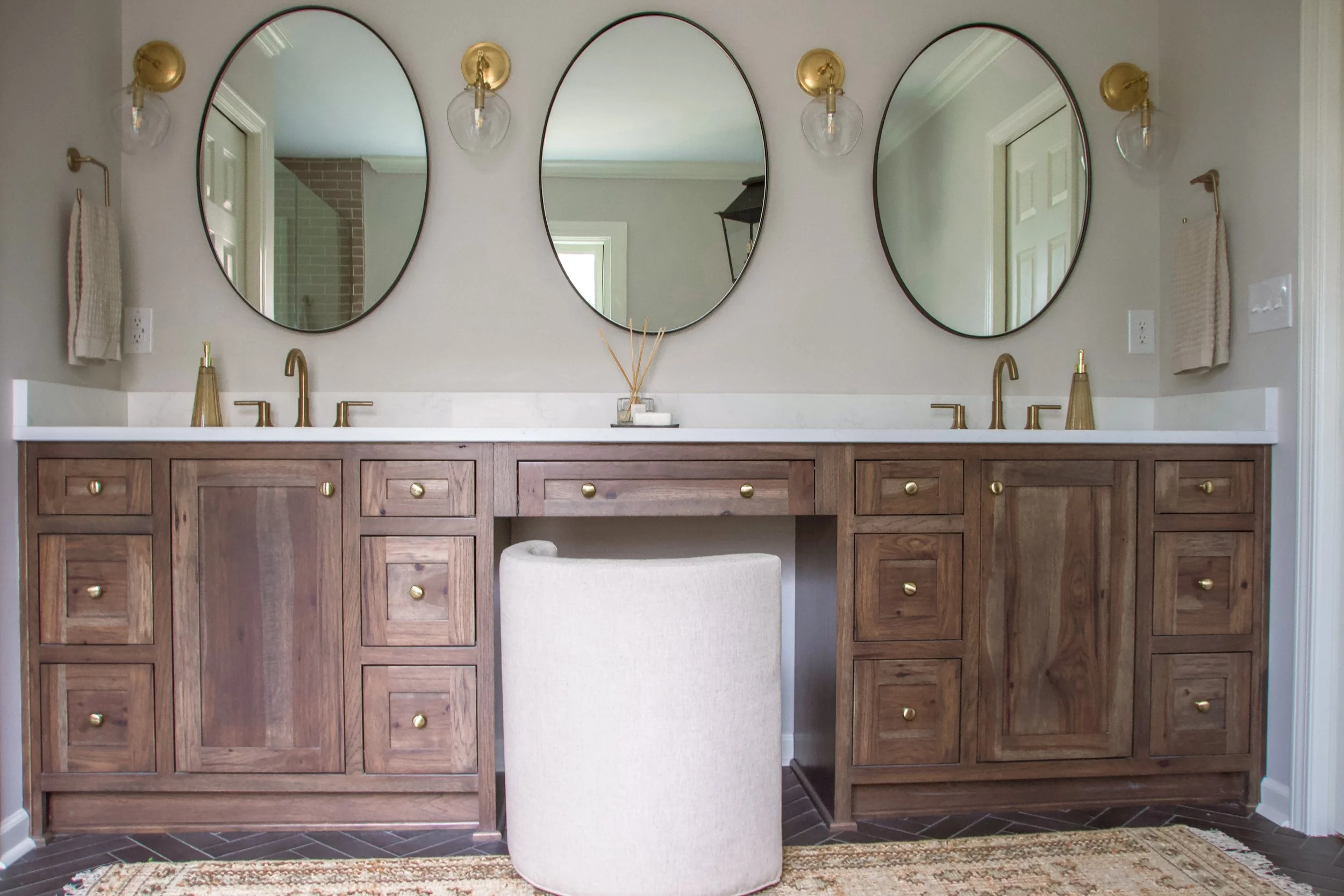
Consistency across materials allows individual elements to feel intentional rather than decorative. Warm brass hardware echoes the tone of the wood cabinetry, while repeated mirror shapes and evenly spaced lighting reinforce balance. When finishes are aligned and proportions are carefully managed, the vanity reads as a unified composition that feels calm, enduring, and quietly refined.
Lighting That Supports Both Grooming and Atmosphere
Bathrooms require a rare balance: flattering, accurate lighting for grooming and softer, low-glow lighting for atmosphere. A single overhead fixture cannot do both well. A layered lighting plan is what makes a bathroom feel composed and flexible, shifting tone throughout the day without needing to redesign the room. When lighting is planned with intention, the bathroom becomes more than functional—it becomes restorative.
Ambient lighting establishes warmth. Task lighting supports the mirror area with clarity and control. Accent lighting adds subtle depth—under-vanity glow, niche lighting, or a soft wash on a wall surface that highlights texture. When lighting is treated as architecture, the room reads far more intentional, and the finishes tend to look richer and more dimensional.
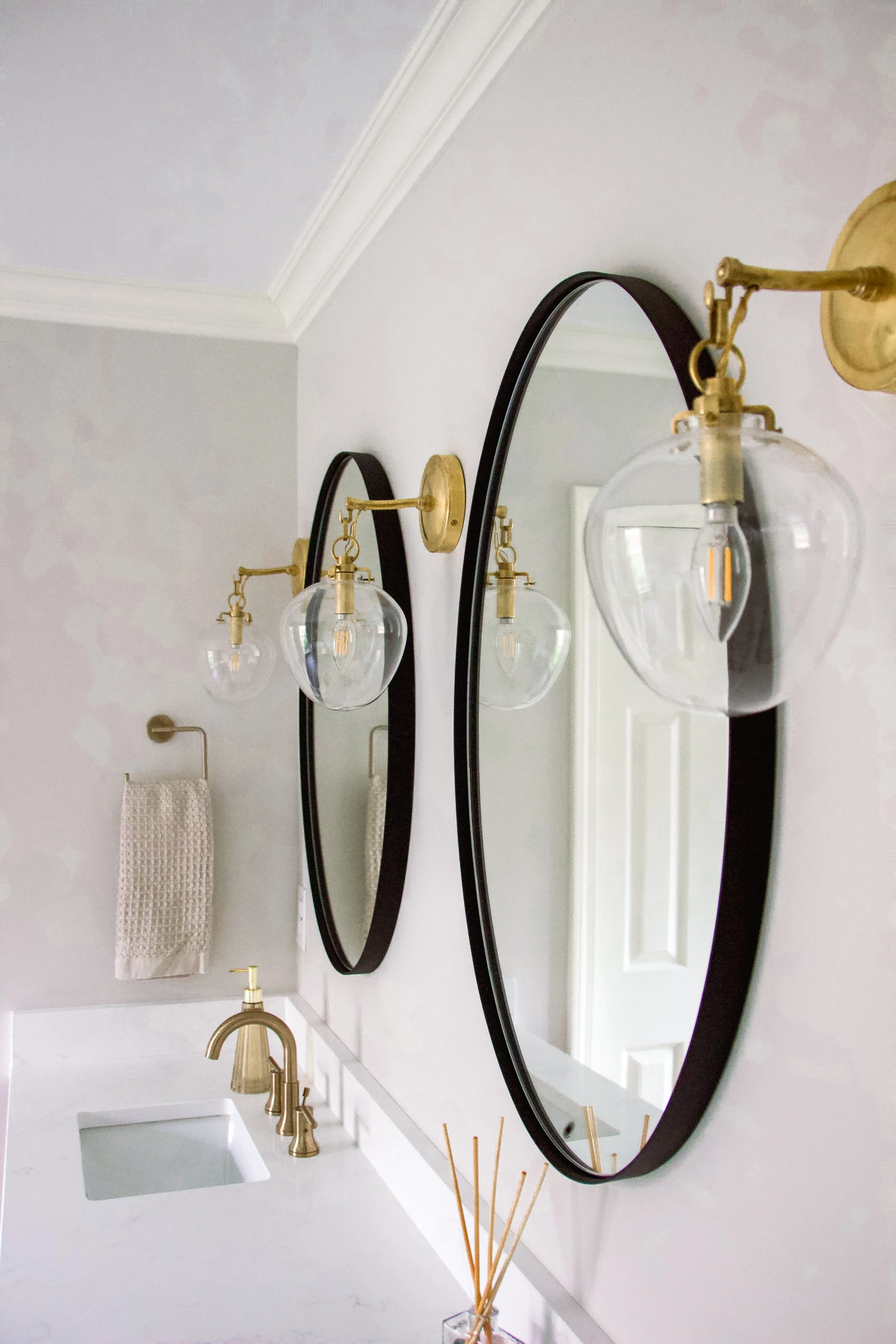
Mirror Lighting that Flatters Without Harshness
The mirror zone should be lit from the sides or integrated into the mirror itself in a way that minimizes shadows. Overhead-only lighting can create harsh under-eye shadows and a cold tone that feels clinical.
A better plan creates even illumination with a warm-to-neutral temperature that supports skin tone.
This is one of the most noticeable upgrades in daily use, and it’s often where bathrooms shift from “pretty” to truly comfortable.
Dimmers are essential. A bathroom should not be locked into a single intensity level. Adjustable lighting transforms how the room feels, making it possible to keep the space bright when needed and calmer when the day is winding down. It’s a small decision with a large impact, and it supports the spa-inspired intent in a very practical way.
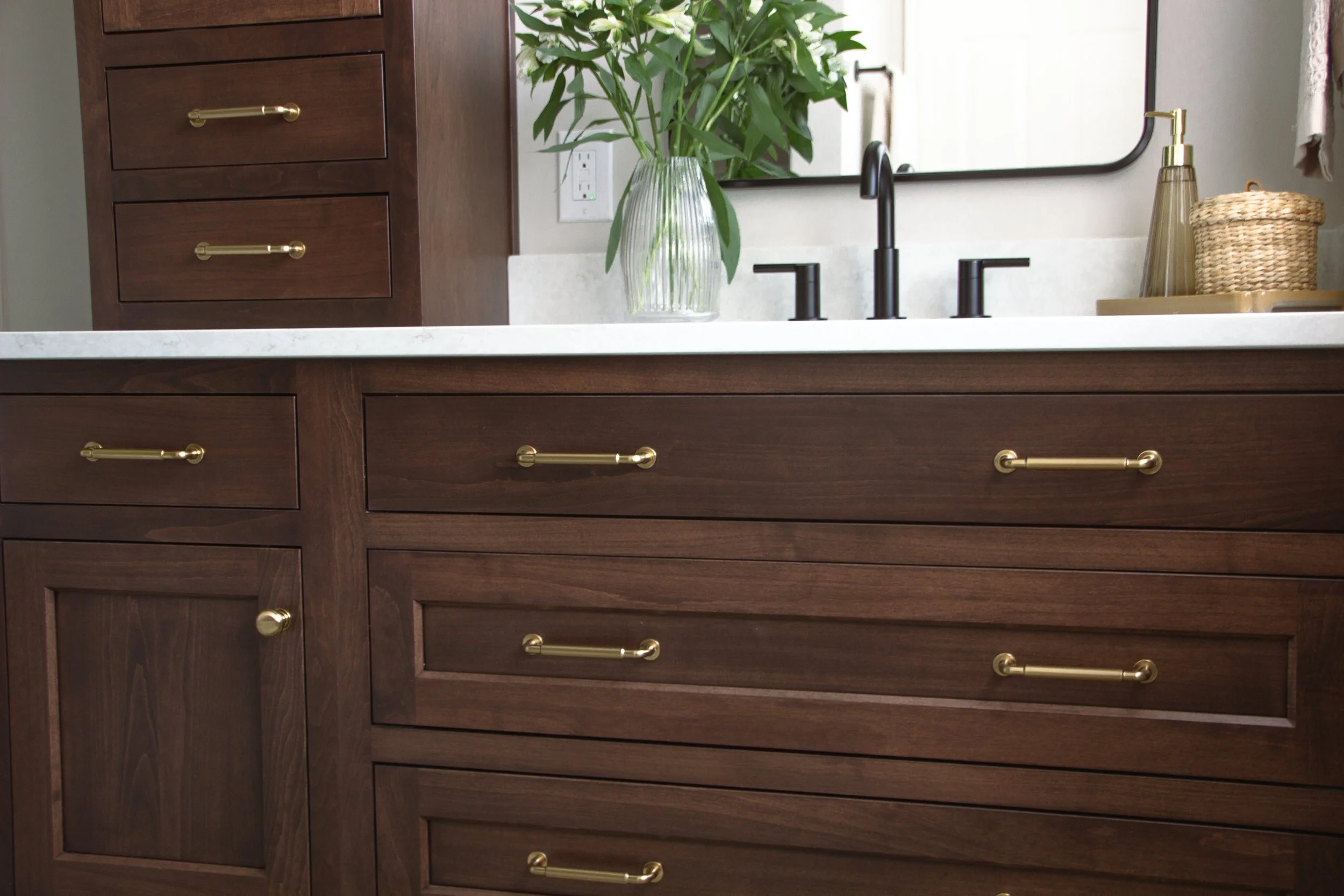
Organized storage is one of the easiest ways to protect a spa-like feel without adding more finishes or décor. Deep drawers and dedicated compartments keep the routine items out of sight, which reduces visual noise and supports a calmer rhythm day to day. Consistent hardware and repeated proportions make the vanity read intentional rather than busy. A clear counter becomes the “quiet surface” that lets the materials and lighting do the work.
Storage that Protects the Calm
Visual calm requires physical order. If storage is an afterthought, counters become crowded, and the bathroom loses its quiet. A spa-inspired design anticipates what needs to live in the room—skincare, hair tools, linens, cleaning supplies—and creates a home for those items that is integrated and discreet. When the room can “close up,” it feels restorative, and the design holds up day after day.
This is where custom millwork and thoughtful detailing can make a meaningful difference. Drawer dividers, outlet placement inside drawers, linen towers, and integrated niches all improve function while keeping the room visually clean. A bathroom that looks serene but functions poorly will never feel like a retreat, which is why storage planning is typically addressed early within a full-service design scope.
Shower Niches, Recesses, and the Small Decisions that Matter
Shower storage is often handled casually, but it’s one of the most visible areas in the room.
A well-placed niche or recessed shelf keeps product bottles from becoming clutter on the floor or corner caddies. Niche placement should relate to the shower’s proportions and tile layout so it feels designed, not inserted.
Small alignment decisions often separate “builder-grade” from “custom,” even when the materials themselves are similar.
The same applies to towel hooks, robe placement, and toilet paper location. When these elements are planned early, the room supports daily life gracefully. When they’re added later, they often feel awkward and undermine the calm. A spa-like bathroom is rarely the result of one big purchase; it’s typically the result of many small decisions made well.
Comfort in a well-designed space often comes from elements that are quietly working in the background. Access to daylight and fresh air helps regulate humidity, protects materials, and makes the room feel healthier over time. When ventilation, storage, and layout are considered together, the space performs better and requires less correction later. These fundamentals are rarely dramatic, but they are what allow a design to feel consistently comfortable year after year.
Comfort, Ventilation, and Long-Term Performance
A spa-like bathroom is also a high-performance room. Ventilation and moisture management protect finishes, prevent mildew, and preserve air quality. Heated floors, quiet exhaust fans, and properly detailed waterproofing aren’t just “extras”—they are the unseen infrastructure that makes the space feel comfortable year after year. These choices protect the investment and the experience, and they keep the bathroom from becoming maintenance-heavy over time.
Comfort is layered. Warmth underfoot, stable humidity, and a room that doesn’t echo or rattle when drawers close all contribute to a sense of luxury. The more quietly the room performs, the more the design can feel effortless. This is part of why looking at Studio Nine’s completed projects can be helpful: many of the most successful rooms appear simple, but they are backed by strong planning and careful detailing.
Designing for Longevity and Ease
The most elevated bathrooms anticipate the future without looking clinical. Comfort-height considerations, properly scaled clearances, curbless shower planning when appropriate, and easy-to-clean surfaces all support longevity.
These decisions are not about overbuilding; they’re about making the room work beautifully over time.
A bathroom that is elegant and forgiving will always feel more luxurious than one that is fragile, especially when the goal is calm daily use rather than constant upkeep.
Even small upgrades—like selecting durable finishes that don’t show every water spot—can improve daily satisfaction. When the room looks good without constant effort, it feels like a true retreat. Longevity is often the most understated form of luxury, and it tends to be where design choices prove their value.
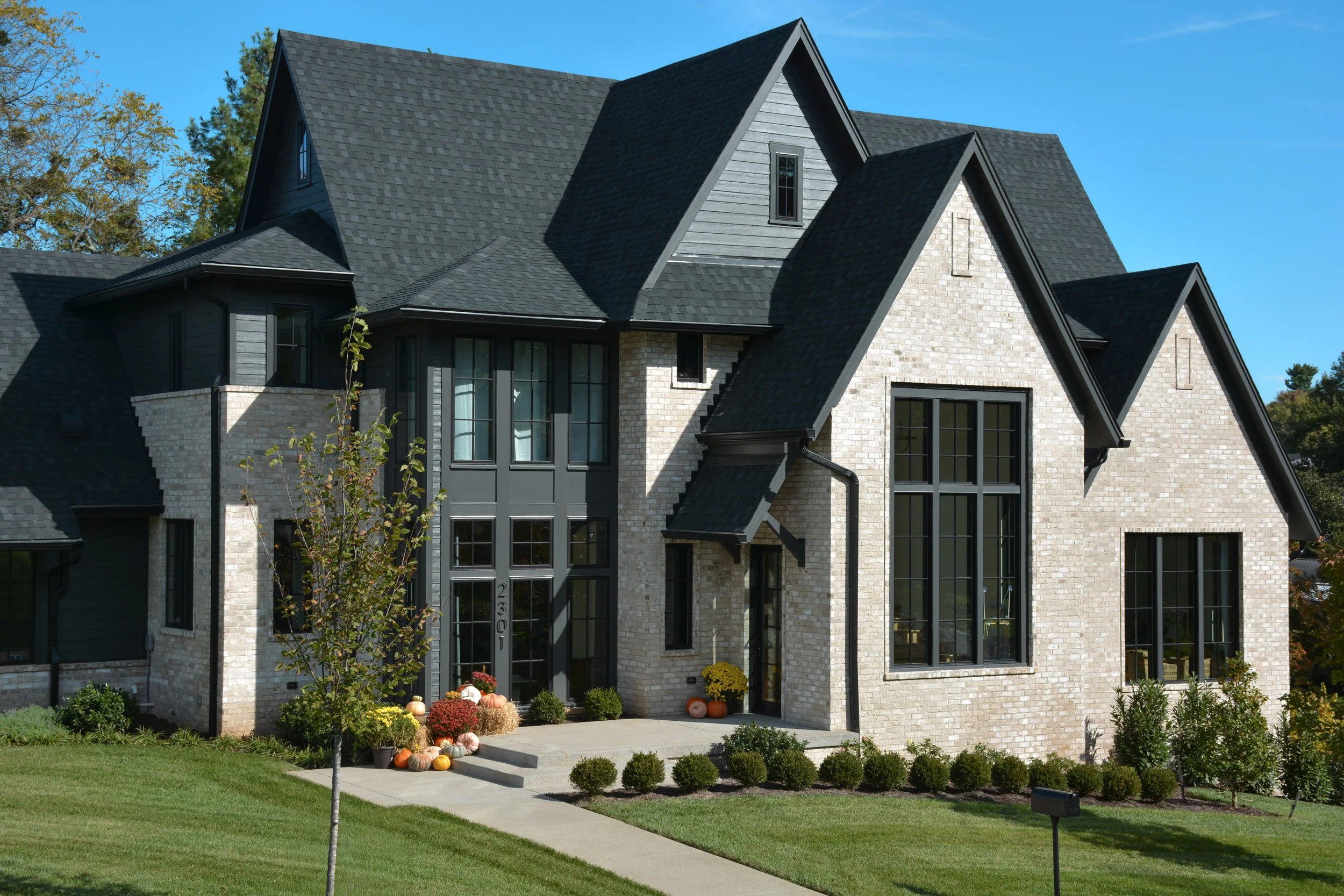
Design choices that prioritize longevity tend to read clearly at every scale, from interior details to the overall structure. A controlled exterior palette signals durability, balance, and restraint rather than trend-driven expression. When architecture is designed to age gracefully, interior decisions often follow the same logic—fewer materials, better proportions, and an emphasis on comfort over novelty. The result is a home that feels cohesive, intentional, and settled over time rather than tied to a specific moment.
Renovation Planning: The Sequence that Protects the Outcome
Bathrooms demand early decision-making. Plumbing locations, valve placement, lighting rough-ins, and tile specifications are not things you want to revise midstream. A studio-led process helps clients commit to a cohesive plan before construction begins, reducing stress and protecting the final result. When the plan is complete, the renovation becomes far more predictable, and the final room reads more resolved because the details weren’t improvised.
This is also where an interior design team adds meaningful value: coordinating trades, maintaining alignment between drawings and selections, and ensuring that details are executed as intended. The calm of the finished room is often the result of calm planning upfront, which is exactly what Studio Nine emphasizes through its interior design services. The goal is a bathroom that feels effortless to live with, not a project that feels like constant decisions.
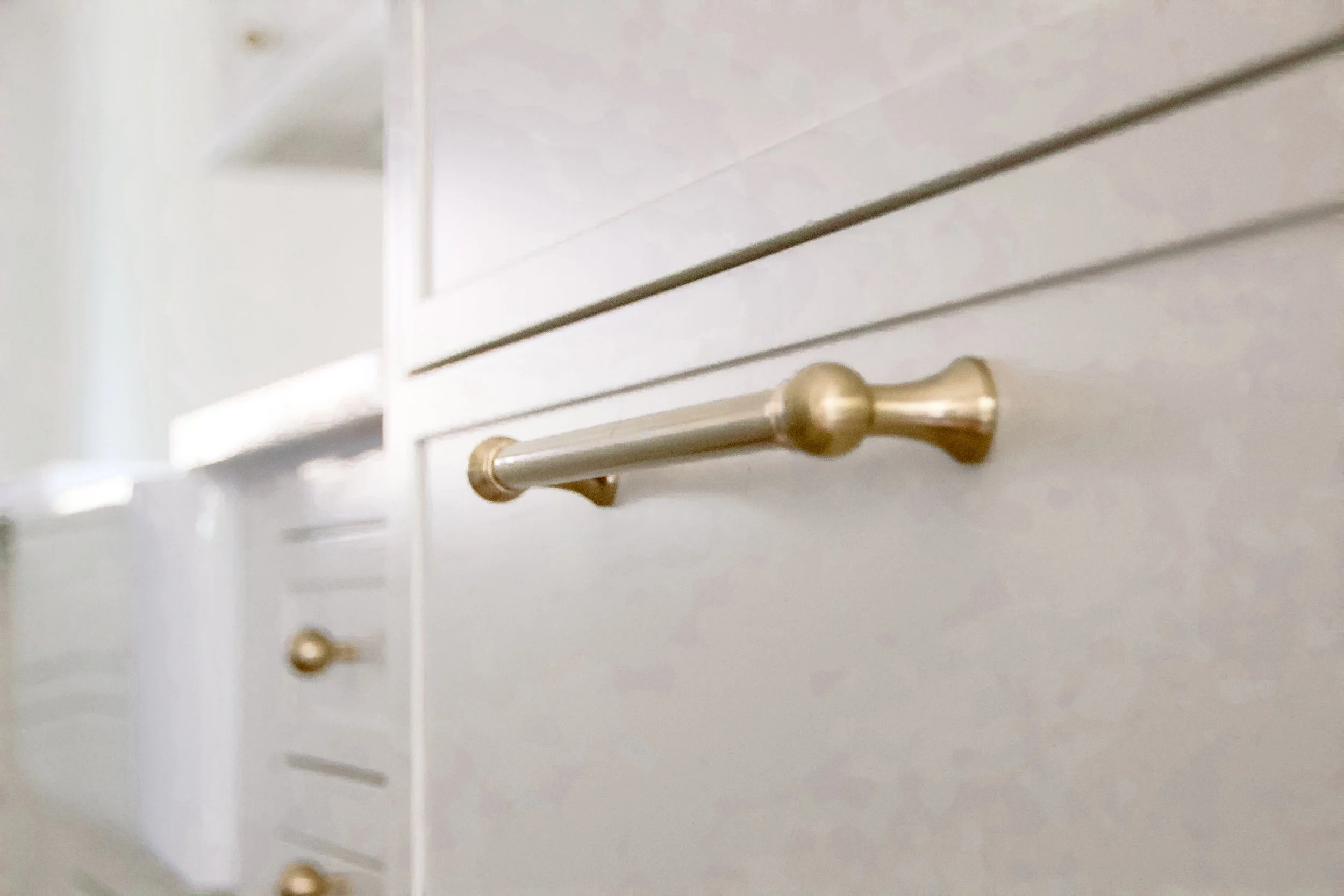
Small, repeated details often do more to shape how a space feels than any single statement element. Consistent hardware choices help cabinetry read as a cohesive whole rather than a collection of parts. When finishes, proportions, and placement stay aligned, the design feels settled and intentional instead of reactive. These decisions rarely draw attention to themselves, but they quietly support a sense of calm that holds up over time.
What “Details” Actually Mean in Bathroom Design
Details are the quiet decisions: grout tone, tile alignment, hardware spacing, mirror height, outlet placement, and how transitions are handled where materials meet. These choices rarely stand out individually, but together they determine whether the room feels resolved. A spa-inspired bathroom is almost always a sum of subtle decisions made well, where restraint and precision carry more weight than novelty.
When these elements are planned early, the bathroom looks effortless. When they are improvised on site, the room often feels slightly “off,” even if the selections themselves are beautiful. Cohesion is built, not assumed, and the best renovations treat the planning phase as part of the design—not an obstacle to it.
Studio Nine Interiors: A Calm, Full-Service Approach
Studio Nine Interiors designs bathrooms with an editorial eye and a practical understanding of how clients live. The work is rooted in restraint, longevity, and materials that feel authentic, creating spaces that support daily routines while reading elevated and composed.
A bathroom should not feel like a showroom—it should feel like a private retreat that belongs to the home, shaped around how you want to live in it.
Clients interested in a spa-inspired renovation can learn more about Studio Nine’s approach on the About page, explore past work in the portfolio, or review the studio’s interior design services.

Bathrooms Designed With Intention
When you’re ready to begin planning, reach out through the contact page.